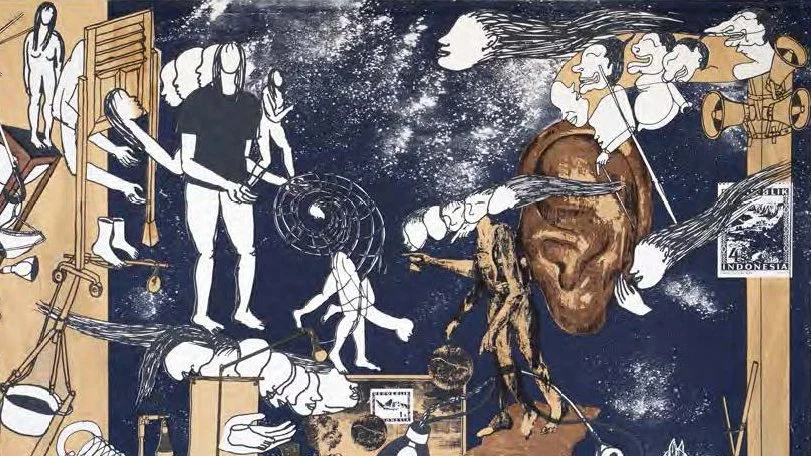
Education Resources for Teachers and Students Stage 5 & 6
Download the full education kit Stage 5 & 6 here
PASAR MALAM \ NIGHT MARKET
CONTEMPORARY PRINTMAKING FROM INDONESIA & AUSTRALIA
EXHIBITIONS QUESTIONS
The questions provided in this resource may be used for written responses, examination preparation, or for open-ended discussions in the gallery or the classroom.
Pre-visit Questions
• Some works in the exhibition deal with taboo subjects and hidden histories. What responsibilities do artists have when representing sensitive or controversial topics?
• Can art challenge dominant narratives or historical accounts. What role do artists play in preserving or questioning cultural memory?
• The exhibition explores themes of mysticism, ritual, and transgression. Why do you think artists are drawn to these themes? What might they reveal about society?
• The exhibition includes works by artists from Indonesia and Australia. How might their perspectives differ or align when exploring shared themes?
Visiting Exhibition Questions
• These artists collaborate across cultures in artmaking. What are the benefits and potential challenges of cross-cultural artistic partnerships?
• Artists use visual language (e.g. colour, scale, symbolism) to evoke emotion or provoke thought. Can you think of examples where visual choices communicate deeper meaning?
• What is the role of the viewer in interpreting art. Is meaning created by the artist, the artwork, or the audience—or all three?
• Contemporary artists can borrow and blend traditional and new practices. Can you find examples where traditional practices are blended with contemporary art techniques?
Post-visit Questions
• Your own cultural background can influence how you interpret the artworks. What assumptions or biases might you bring into the gallery space?
• Rituals and myths shape cultural identity. What happens when they are lost, commodified, or reimagined?
• Artists are not afraid to reveal hidden truths or spaces.
If you were to create an artwork about a “shadow space” in your own community, what would it be about? What materials or methods would you use to express it?
• The curator’s role is to strengthen the impact of each individual work through collective experience. How did the immersive exhibition design (lights, sound, layout) affect your experience of the artworks?
VOCABULARY
Appropriation: to take something for one’s own use. In art this refers to the sampling of an image and redefining its established meaning through its involvement in new work.
Colonisation: The act of one country taking control over another, often leading to cultural loss, exploitation, and long-term impacts on identity and society.
Contemporary: belonging or occurring to the present.
Conventional: things that are normal, ordinary and following the accepted way.
Cultural hybridity: A mix of different cultural influences in one person or artwork.
Identity: How someone sees themselves, including culture, beliefs, and experiences.
Marginalisation: When a group or idea is pushed to the edges of society and ignored.
Memory: Personal or shared recollections that influence how we see the world.
Mysticism: Belief in hidden or spiritual truths beyond everyday understanding.
Narrative: A story told through words, images, or symbols.
Non-conventional: things that do not follow the acceptable or normal way, but are eccentric, alternative or new.
Otherness: The feeling of being different or outside the norm in a group or culture.
Recontextualization: is a process that extracts text, signs, or materials from its original context and reuses it in another context.
Ritual: A repeated cultural or spiritual practice, often with symbolic meaning.
Screenprinting: A methos of printing images using a mesh screen and ink.
Symbolism: Using images or objects to represent ideas or emotions.
Taboo: A subject or action that is socially or culturally avoided or forbidden.
Tradition: the transmission of customs or beliefs from generation to generation, or the fact of being passed on in this way.
Bahasa Indonesian and Javanese language words:
Istana Hantu: ‘Haunted House’ - A symbolic space of fear and folklore.
Kejawen: ‘Javanese Spiritual Beliefs’ - A mix of animism, mysticism, and Islamic teachings.
Pasar Klitikhan: ‘Thieves Market’ - A market selling old, discarded, or possibly stolen goods.
Pasar Malam: ‘Night Market’ - A lively, chaotic space of trade, ritual, and transgression.
Pasar Senthir: ‘Lamplight Market’ - A second-hand market, often chaotic and mysterious.
Pidan:’ Sacred Silk Textile’ - Used in traditional Cambodian rituals (referenced in related exhibitions). Preman: ‘Gangster / Thug’ - Often used to label victims of state violence.
Rajah: ‘Prayer Charm / Talisman’ - A written prayer worn for protection or fertility.
Sekaten: ‘Javanese Carnival Festival’ - A traditional celebration blending Islamic and animist rituals.
Siksa Neraka: ‘Torments of Hell’ - Religious imagery used to scare or instruct moral behaviour.
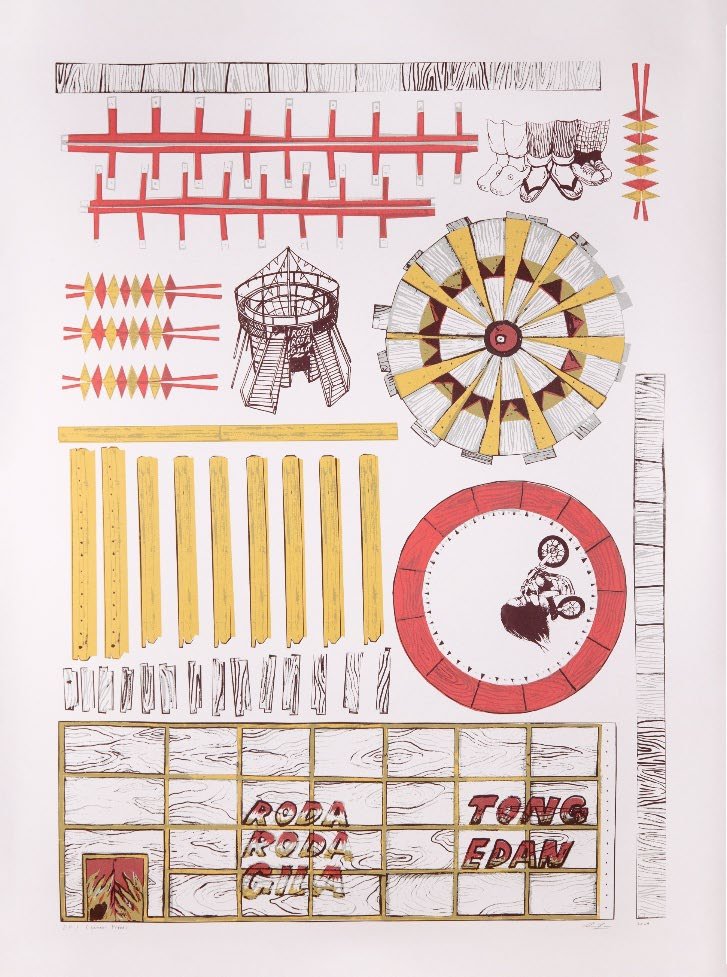
Tong Edan: ‘Crazy Barrel’ - A carnival ride where motorcyclists ride inside a barrel.
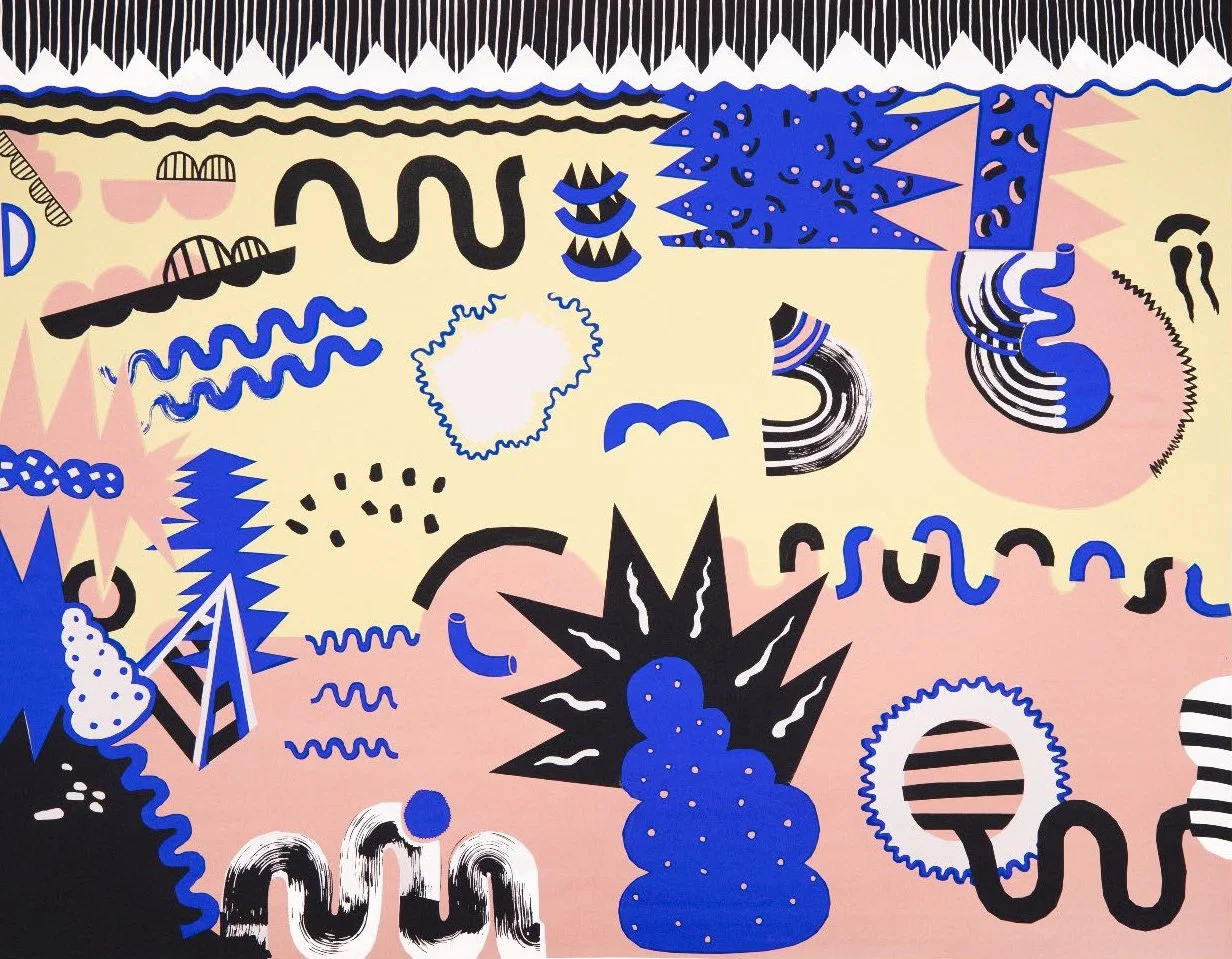
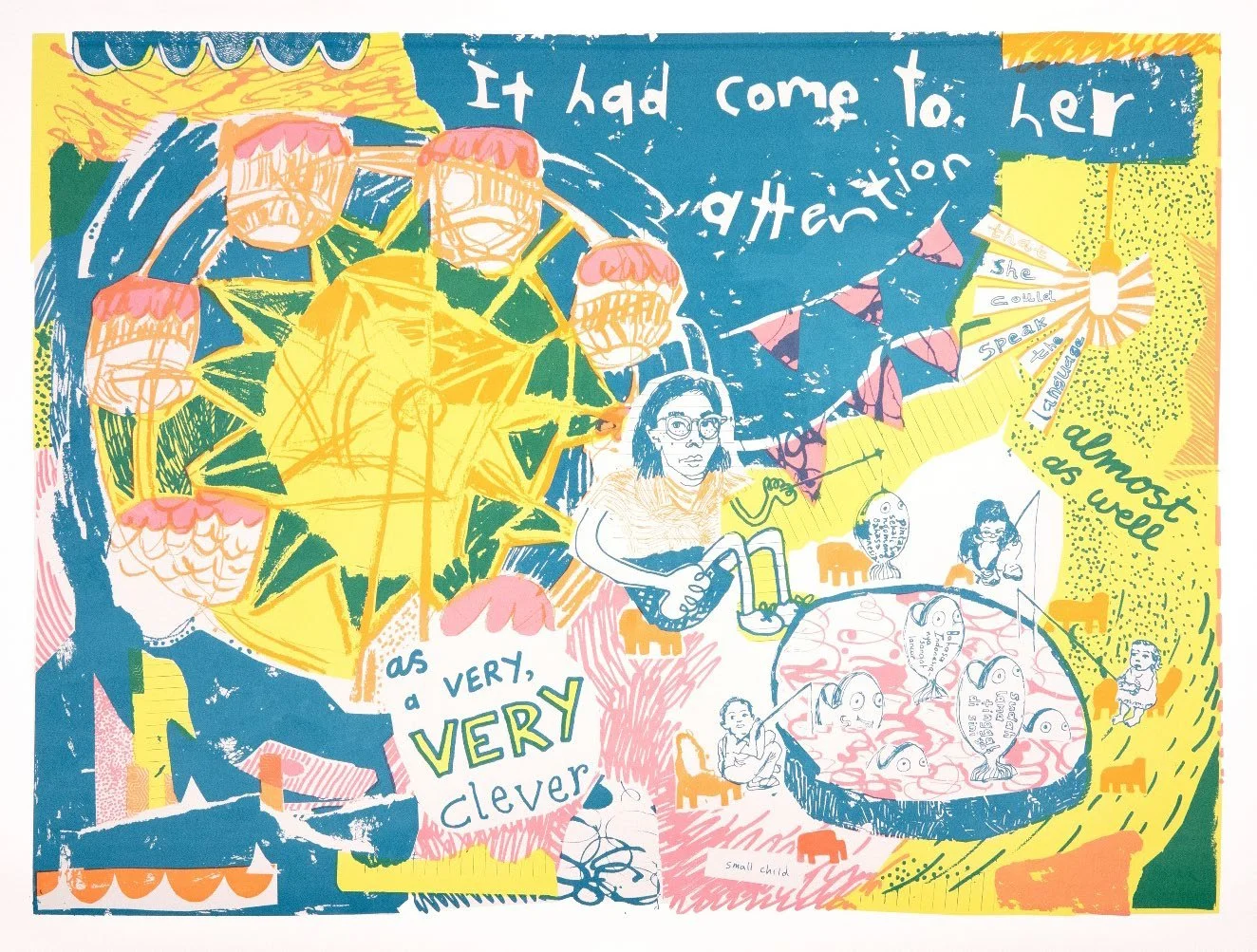
Amina McConvell in collaboration with Krack Studio Good Fortune 2024 Screenprint on 100% cotton Clairefontaine paper 150 x 200 cm
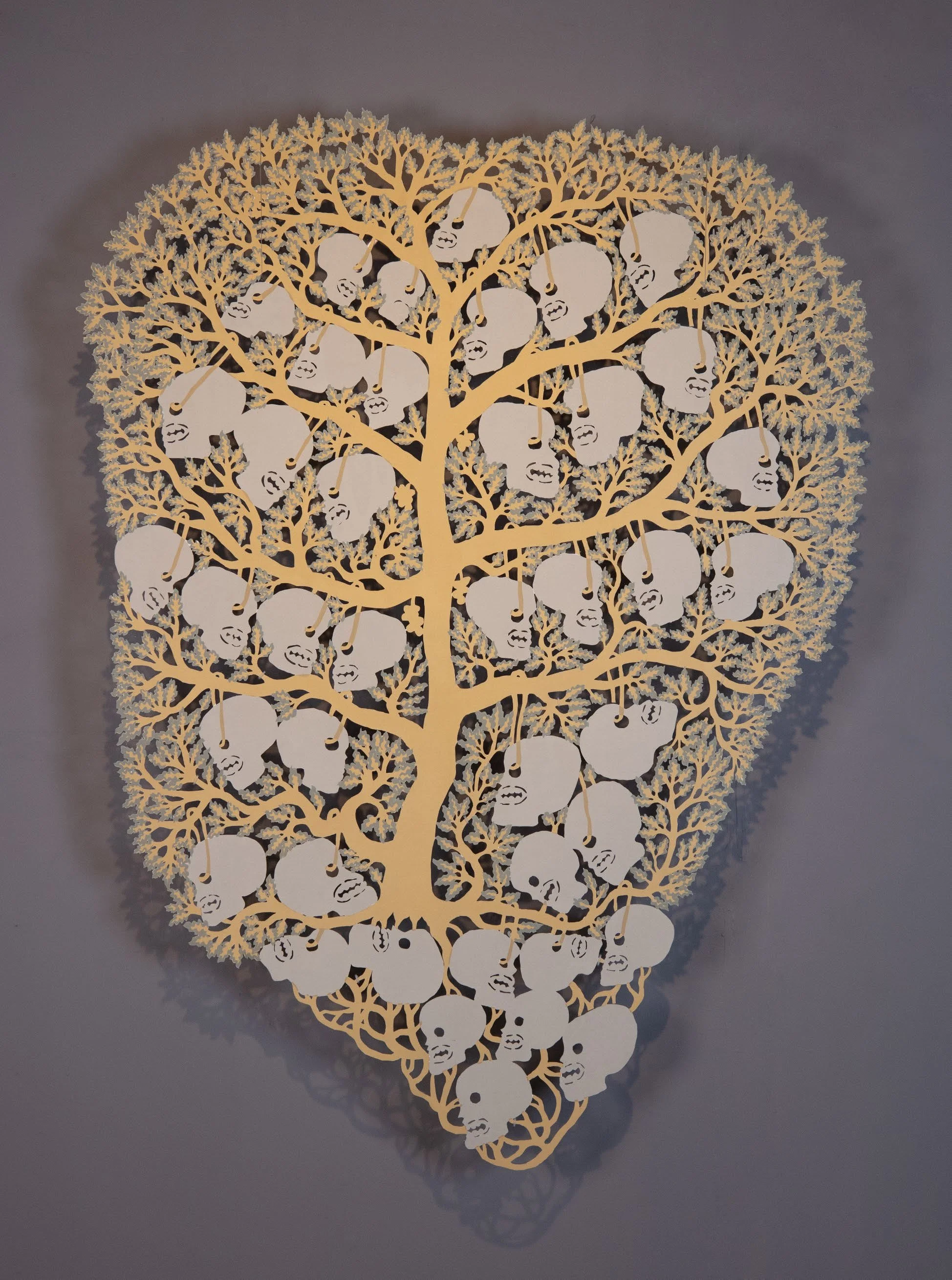
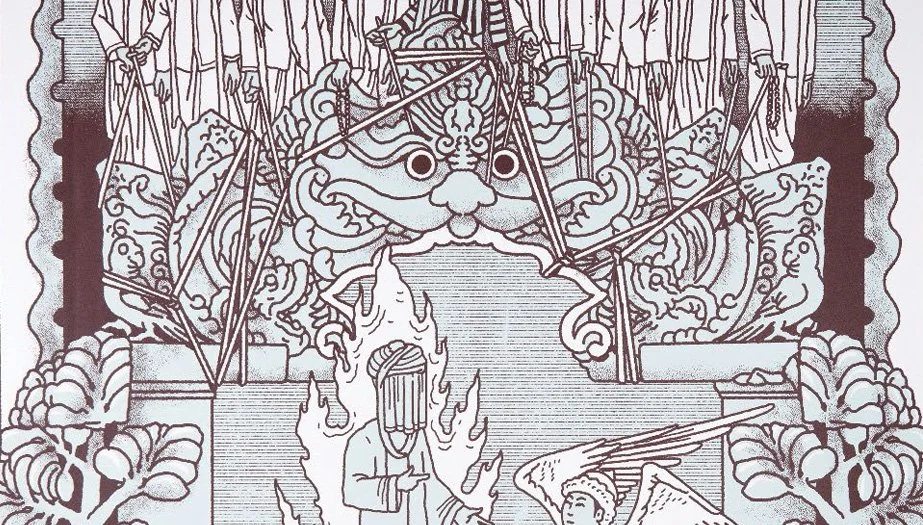
Jumaadi in collaboration with Krack Studio, Prajurit Jaga Malam 2024. Screenprint on 100% cotton Clairefontaine paper 200 x 150 cm
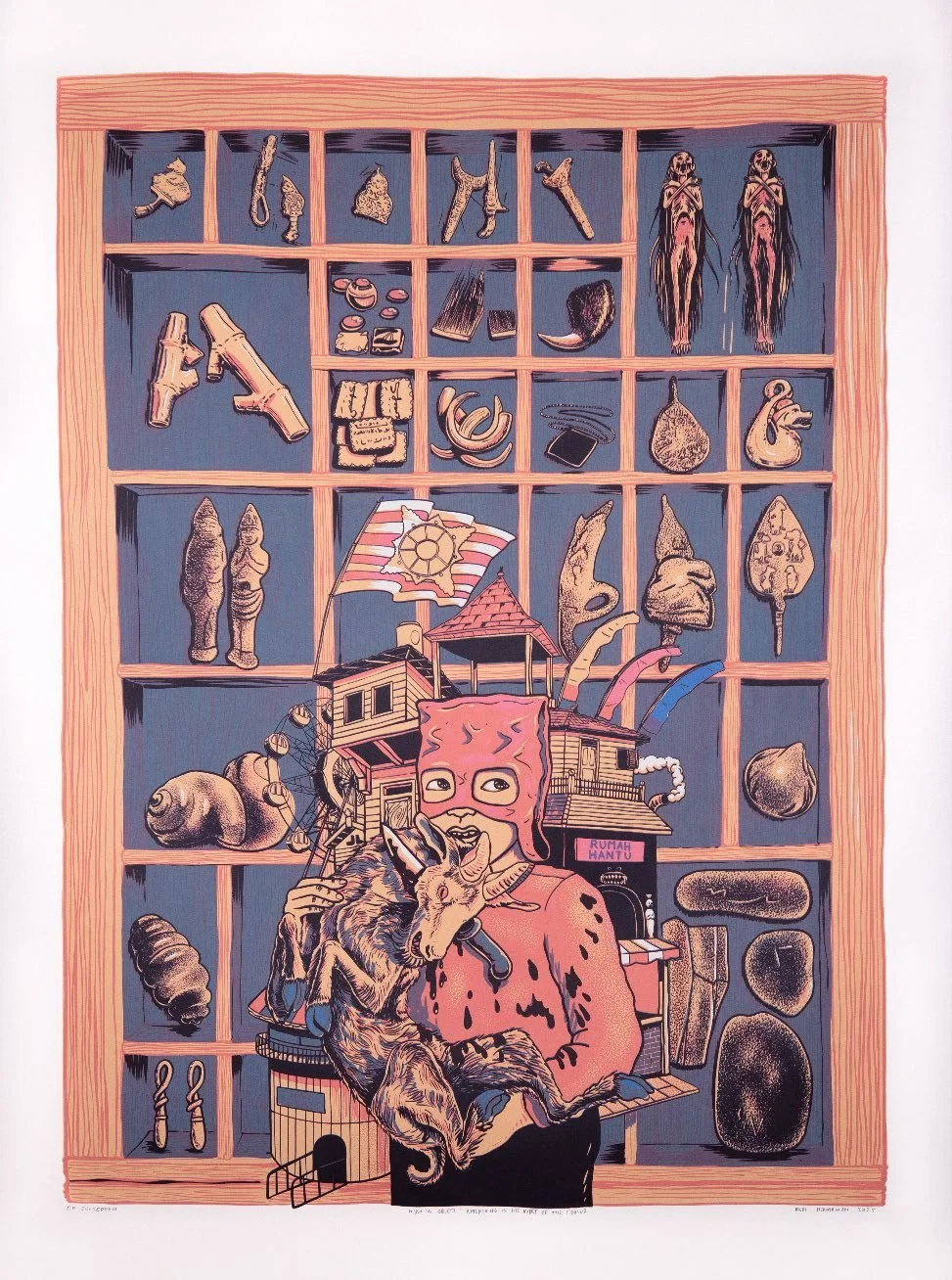
Rudi Hermawan in collaboration with Krack Studio, Mystical object; whispering in the midst of the crowd 2025 Screenprint on 100% cotton Clairefontaine paper 200 x 150 cm
FOR TEACHERS
Pasar Malam is a touring exhibition featuring large-format screenprints by 15 Indonesian and Australian artists, exploring the vibrant, chaotic, and often transgressive world of the Indonesian night market ‘Pasar Malam’. Through complex design techniques and evocative imagery, the exhibition delves into themes of mysticism, mythology, social justice, and hidden histories. Artists draw on personal, cultural, and political narratives—ranging from spiritual rituals and folklore to erased episodes of violence and resistance.
For Secondary School Visual Arts students, Pasar Malam offers rich educational opportunities to engage in themes of mythology, politics and identity through a playful, contemporary lens and practice. It encourages critical engagement with cultural identity, symbolism, and the role of art in society. Students can explore how materials, scale, symbolism and collaboration influence meaning, while exploring Indonesian approaches to artmaking that reinterpret traditional practices to create bold, contemporary works. Through guided discussion and activities, Pasar Malam becomes a powerful platform for understanding the intersection of art, culture, and community in a global context. The educational resources can be used in a classroom setting or used as a tool for rich exploration during a school visit to one of its touring sites. Additionally, the exhibition is a rich resource for Printmaking programs or individual students exploring printmaking through their artmaking.
The Education Kit can be used in full as a comprehensive case study completing all learning experiences over 3-4 weeks, or teachers can select from the individual pages and chose to complete the Case Study; the Focus Artist Activities or Behind the Print as individual learning experiences.
STAGE 6 CASE STUDY: Art as a Cultural Mirror
Revealing Hidden Histories and Social Realities through the Night Market
Designed for Years 11–12, this case study uses the exhibition Pasar Malam: Night Market as a lens to explore how contemporary art reflects cultural complexity, political trauma, and social contradiction. Drawing on the metaphor of the Indonesian night market—a space of mysticism, marginalisation, and transgression—the exhibition invites students to consider art as a cultural mirror that reveals hidden histories and challenges dominant narratives.
Key concepts for Senior Visual Arts Students
• Art as Social Commentary
• Cross-Cultural Collaboration
• Symbolism and Materiality
• Historical and Political Engagement
With 15 artists responding to the night market metaphor, four themes emerge:
1. Carnivalesque & Community – Restu Ratnaningtyas, Tobias Richardson, Amina McConvell, Ida Lawrence
2. Mysticism, Mythology & Ritual – Malcolm Smith, Enka Komariah, Rizqi Maulana, Ipeh Nur, Prihatmoko Moki
3. Collecting & Illicit Pleasures – Tamarra, Timoteus Anggawan Kusno, Rudi Hermawan
4. Shadows & Buried Histories – Jumaadi, Leyla Stevens, Alfin Agnuba
Resources: Artist pages, catalogue, and media kit on 16albermarle Project Space website.
To assist with this visual analysis, use the exhibition information available on the 16albermarle Project Space website on the artist pages, download the catalogue and media kit.
Begin the case study with a visual analysis learning experience to engage students in a deeper inquiry into the exhibition. In groups of four, select works from one theme and compare symbolism and materiality.
• Prepare a short presentation on similarities and contrasts in message, imagery, and approach.
• Share and discuss as a class.
Guiding question: What do these works reveal about the artists’ engagement with cultural identity and artmaking?
Next, engage in a critical reflection through debating the ethics of representing trauma and taboo in art.
Read excerpt from Sarah Adams’ What Makes Art Taboo? (ArtsHub, 2012).
‘Taboo art can have much the same emotional effect and the trigger of your response is just as subjective as the location of that one spot, making it difficult to determine where the line of what’s appropriate is drawn, or if there should even be a line at all.
Often overshadowed by the weight of its subject, taboo art can be difficult to understand. As we progress deeper into a more atheist and scientific society in Australia, a lot of what was once considered taboo – specifically sex and religion – are no longer received with such sensitivity. Instead, new taboos begin to emerge, such as racism, cruelty, slavery and even something as simple as smoking while pregnant. Events such as September 11th and the Holocaust are also taboo.
More than just simply offensive, taboo art can shatter typical conventions in cultures where certain groups are oppressed, open up a conversation about sensitive topics, and reveal the complexities and challenges of issues often deemed too provocative to talk about.’ What makes art taboo?
In a format that suits your students’ ability and interest, debate as a class or in groups the ethics of bringing trauma and taboo into the arts. Debate the ethics of representing trauma and taboo in art. Suggested artists for research: Brook Andrew, Bill Henson, Nick Cave, FX Harsono, Shirin Neshat, Sopheap Pich, Ana Mendieta, Artemisia Gentileschi.
Support article: Artists Who Challenged Taboos and Changed the World – M3V
Guiding questions for student research/debate script:
• Representation & Responsibility: Do artists have ethical obligations when depicting trauma?
• Audience & Impact: Should triggering content require warnings?
• Cultural Context: Is it ethical to engage with taboos from other cultures?
• Freedom vs. Censorship: Should limits exist on taboo art? Who decides?
The final learning experience, explore how immersive design—lighting, soundscapes, spatial layout—reinforces the metaphor of the night market as a chaotic, liminal space. Use images and media release to analyse curatorial strategies. I
In keeping with the slightly seedy, mysterious and precarious night markets of Java, the exhibition is designed as an immersive and engaging experience. Visitors will navigate a crowded and colourful space, in which our 15 artists bring to life the chaos and permissiveness of the Night Market. The entrance will be guarded by a “loket” (a ticket booth), and coloured lights and strings of flags will lure visitors into the darkness. Aspecially commissioned soundtrack will animate the clatter of carnival rides, shrieking crowds and spruikers, underscored by contemporary Indonesian experimental music. – Excerpt from Pasar Malam Media Release
FOCUS ACTIVITIES FOR STUDENTS
These activities are designed to help students in Stage 5 & 6 engage with the Pasar Malam: Night Market artists through observation, discussion, and creative response and can be completed in the gallery or classroom.
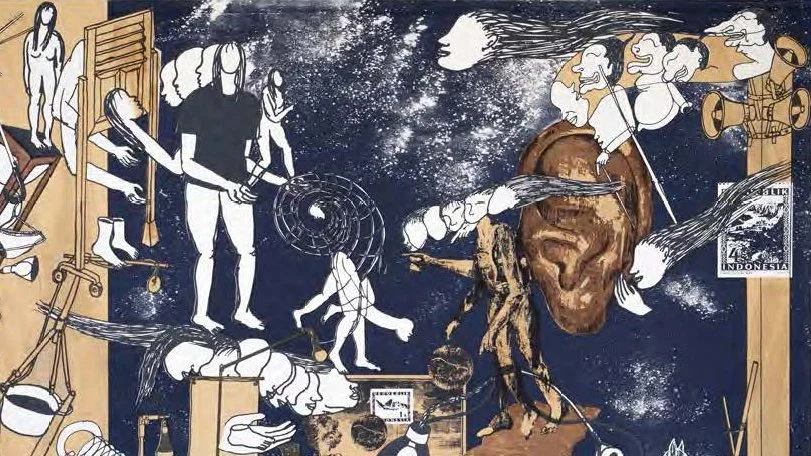
BEHIND THE PRINT
Exploring the Art of Screenprinting
The role of the master printmaker is not simply technical—it’s deeply collaborative. The exhibition’s large-format screenprints were brought to life through close partnerships between artists and printmakers, where ideas, techniques, and visual language were developed together.
Malcolm Le Smith, Alfin Agnuba, and Rudi Hermawan worked side-by-side with artists at Krack Print Studio, engaging in ongoing dialogue via WhatsApp, email, and in-person studio sessions. Rather than executing pre-defined designs, the printmakers contributed creatively to the development of each work—offering insights into materials, scale, and process that shaped the final outcomes.
This collaborative model allows artists to experiment and refine their concepts, while the printmakers ensured technical excellence and consistency across the exhibition. The result is a body of work that reflects shared authorship, mutual respect, and a fusion of artistic and technical expertise. For students, this process highlights the importance of teamwork in contemporary art practice. It shows how printmaking is not just a craft, but a dynamic space for dialogue, innovation, and cultural exchange.
Meet the Master Printmakers…
Rudi Hermawan
Rudi Hermawan is a master printmaker whose practice is grounded in collaboration and technical expertise. His approach begins with understanding the artist’s vision and negotiating the practicalities of screen printing, such as colour limitations and scale. For Rudi, the process is not merely technical but interpretive—he works to preserve the essence of the original artwork while embracing the unique visual language of printmaking. This involves creating master templates for each colour, producing proofs to ensure alignment with the artist’s intent, and using high-quality materials like acid-free paper and archival inks for durability. Rudi sees himself as both translator and co-creator, balancing fidelity to the artist’s concept with the inherent characteristics of the print medium. His role is deeply rewarding when he can transform non-graphic works into graphic editions that retain the original spirit yet reveal new possibilities through the layered, tactile qualities of screen print.
Malcolm Le Smith
Malcolm Le Smith approaches printmaking as a deeply collaborative and conceptual process. Rather than seeing himself solely as a printmaker, he describes his role as part of an “image-making ecology,” where the studio becomes a machine for generating images. His practice revolves around working with people, inventing projects that harness collective skills, and ensuring that the artist’s vision is preserved while adapting it to the strengths and limitations of screen printing. Malcolm balances technical considerations—such as colour separation, scale, and material choices—with the conceptual integrity of the original work. He often creates proofs to test interpretations and navigates decisions through dialogue with the artist, aiming for results that feel authentic yet embrace the unique qualities of print. For Malcolm, the most rewarding aspect of this process is seeing images embark on their own life beyond the studio, inspiring new ideas and conversations.
Alfin Agnuba
Alfin Agnuba approaches printmaking as a collaborative process that prioritizes the artist’s vision while embracing the technical possibilities of the medium. Trained in Graphic Fine Arts (Printmaking) at the Indonesian Institute of the Arts, Yogyakarta, Alfin sees his role as both translator and co-creator. He begins by explaining the unique characteristics of screen printing, such as its ability to produce editions, and works closely with artists to preserve their distinctive lines and colour choices. Alfin navigates challenges like scaling up digital previews and achieving accurate colour matches by presenting options and engaging in dialogue, ensuring decisions are mutually agreed upon. His process involves meticulous preparation—digitising files, separating colour layers, creating screens, mixing inks, and coordinating a team for large-scale prints. For Alfin, the most rewarding moment is witnessing the artist’s satisfaction when the final print reflects their intent while showcasing the layered, tactile qualities of screen printing
Highlight significant words in each artists’ paragraph to explore their intentions and beliefs around their role as Master Printmakers.
Process Mapping Activity
Print out the series of studio progress photos showing the different stages of the Pasar Malam artworks (e.g., preparing screens, colour separation, layering inks, drying prints). Arrange the photos in chronological order and annotate each step with what you think is happening and why it matters. As you create your process map, imagine the conversations that would take place at each step between the artists and Master Printmakers - make a script!
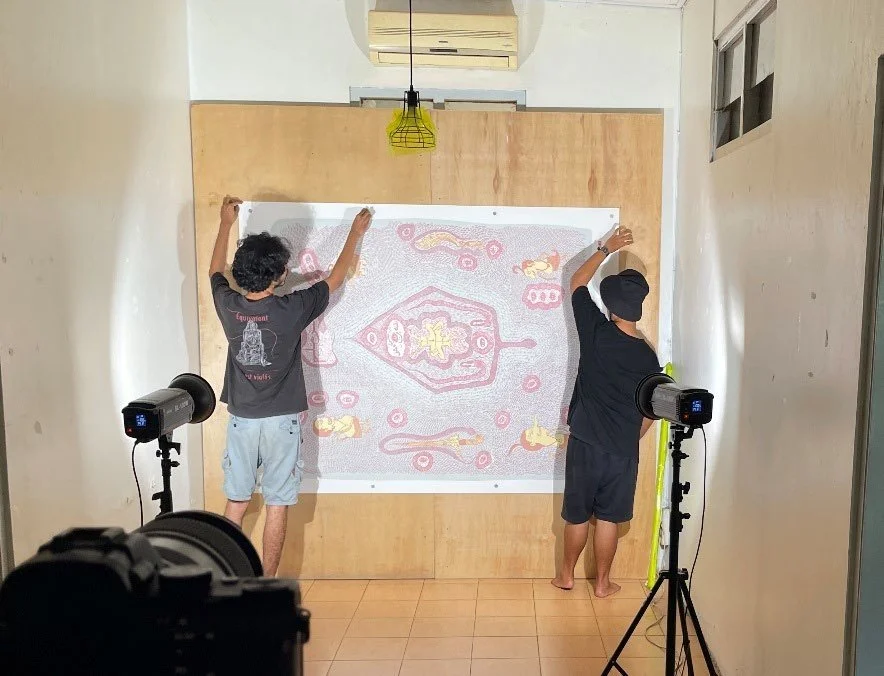
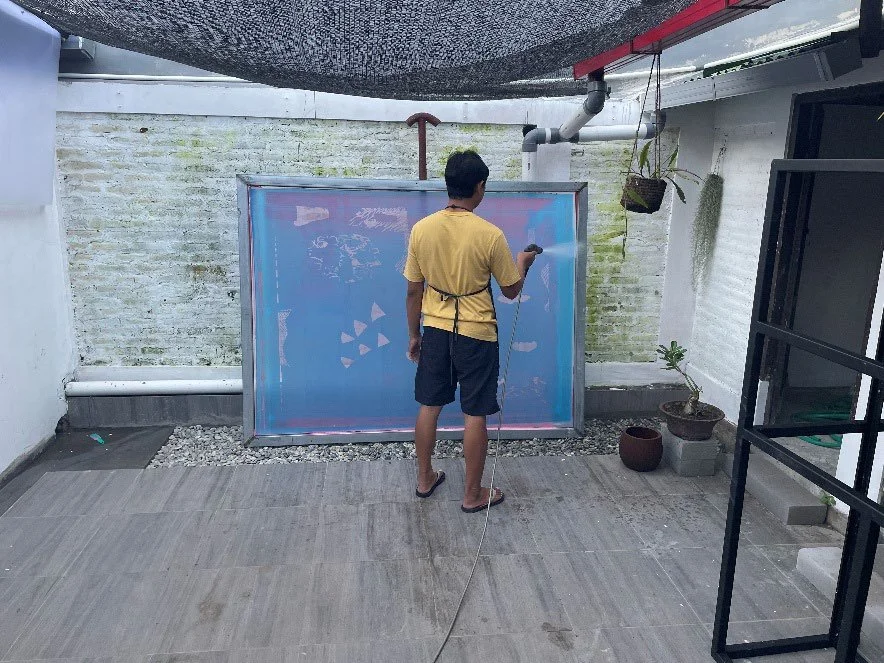
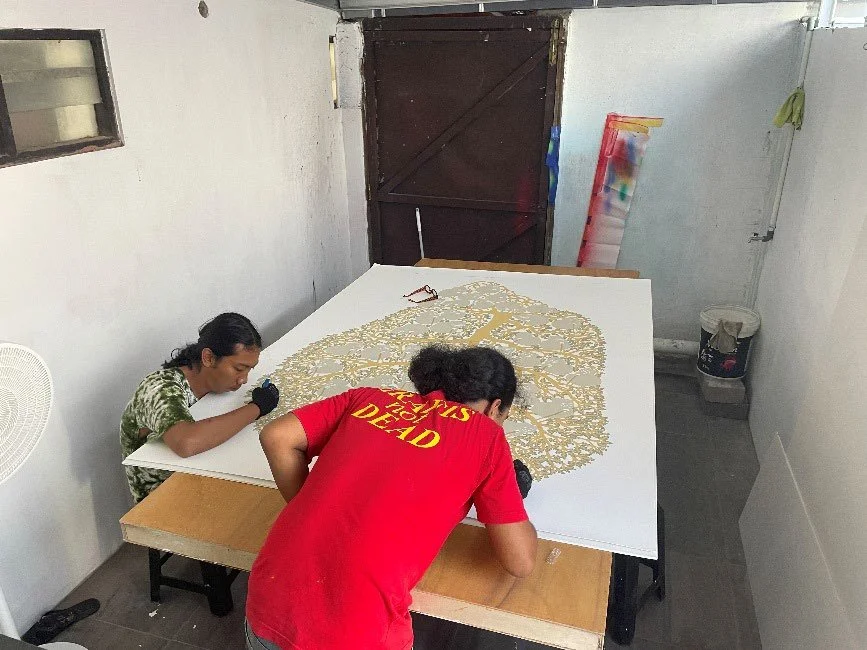
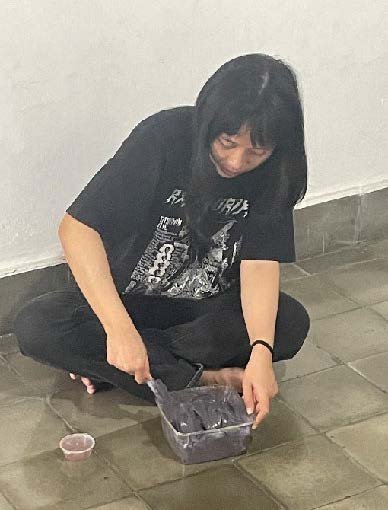
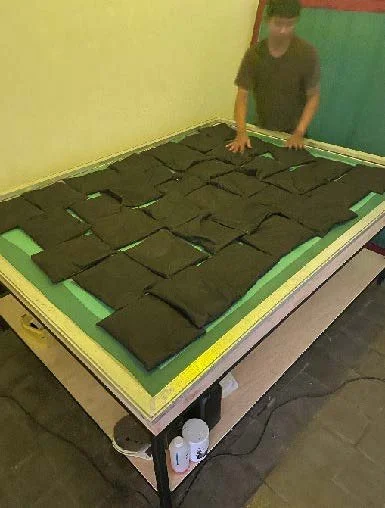
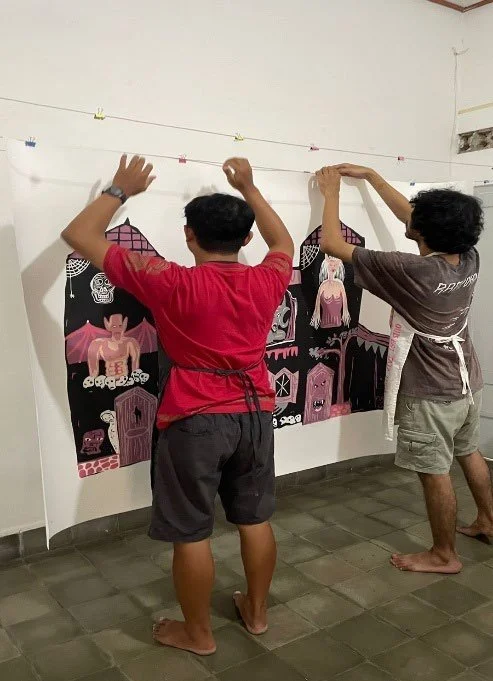
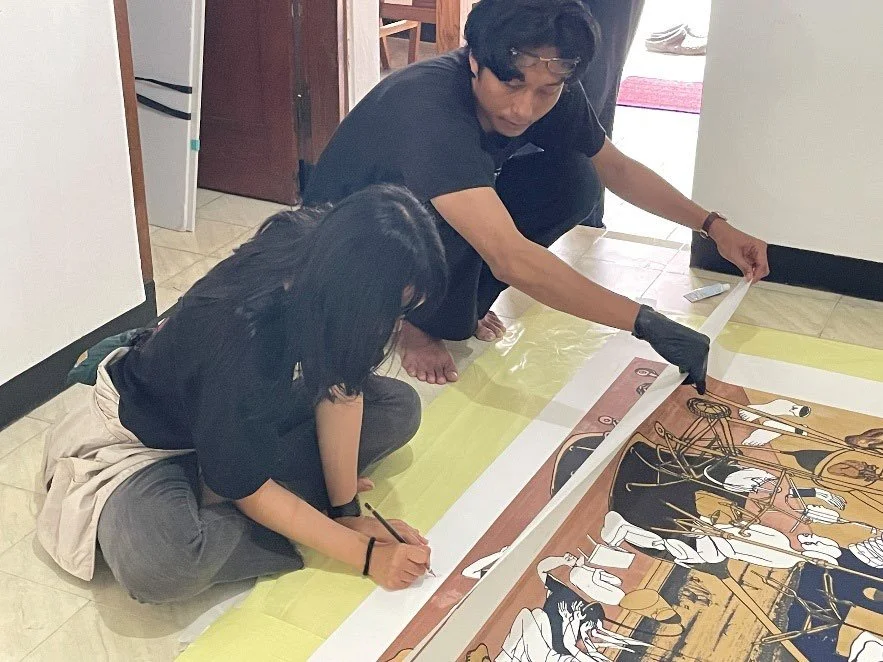
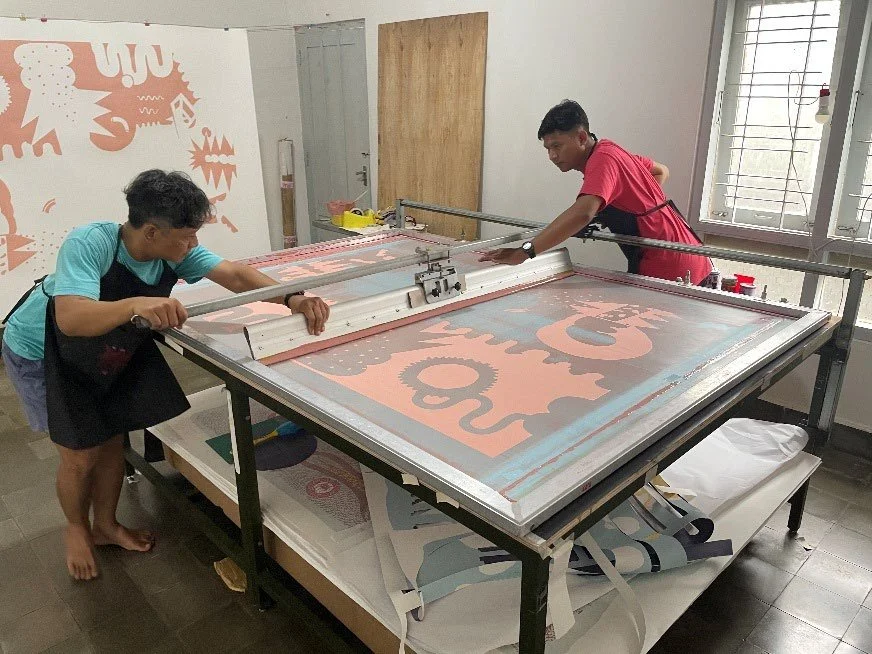
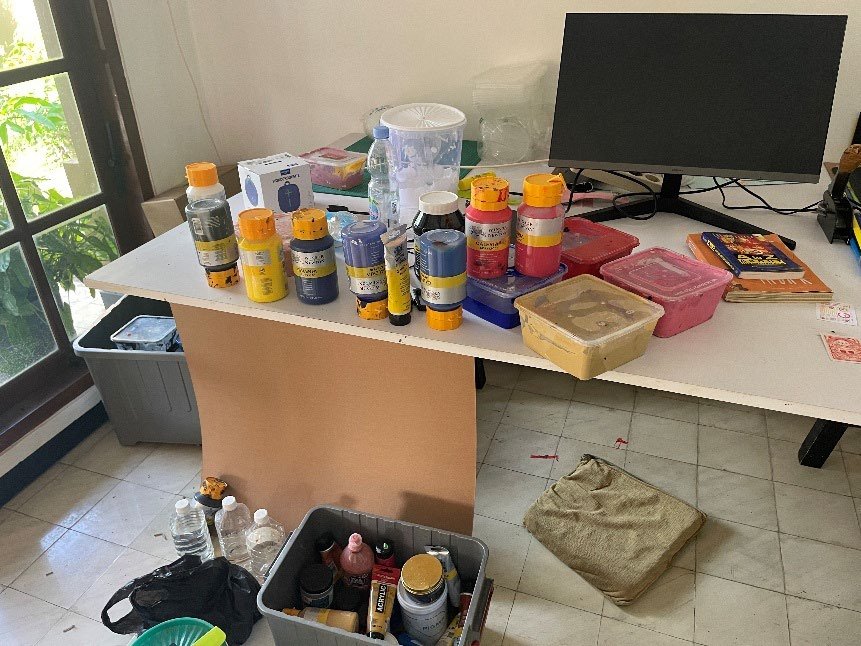
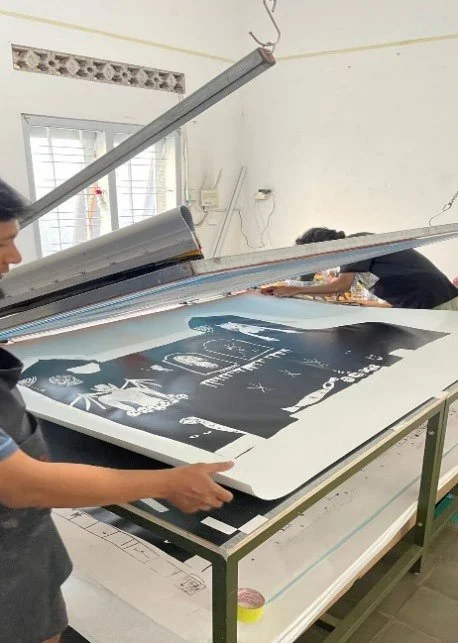
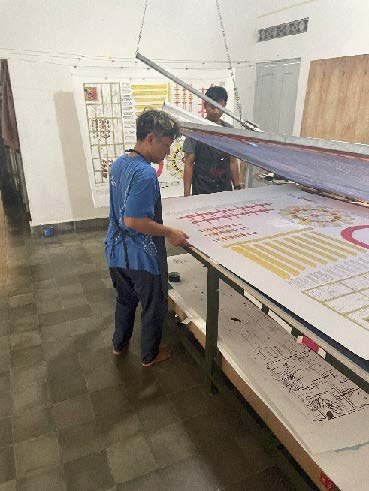
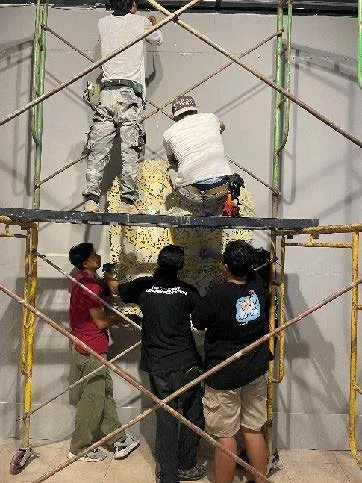
All images courtesy of Krack Studio
USEFUL LINKS
16ablermarle Project Space Website 16albermarle - Pasar Malam | Night Market
Krack Studio Website Krack!
Northern Centre for Contemporary Art Home | Northern Centre for Contemporary Art
Fremantle Arts Centre Walyalup Fremantle Arts Centre
Bunbury Regional Art Gallery BRAG | Exhibitions & Events in City Of Bunbury WA
Redland Art Gallery Redland Art Gallery | Redland Art Gallery
NorthSite Contemporary Arts www.northsite.org.au
Hazelhurst Arts Centre Hazelhurst
About contemporary art
in southeast Asia
Eluding simple definitions or falsely universalising connections between distinct histories and cultures, the art of southeast Asia is vibrant, dynamic and complex, bearing traces of “the rise and fall of kingdoms and empires, and … the historical traces of colonisation and the often-traumatic birth of nations.”1 Artists from Indonesia, Cambodia, Thailand, Myanmar, Laos, the Philippines, Vietnam, Singapore and Malaysia explore local and global themes including personal and national identity and community, cultural knowledge, power, faith and the increasingly urgent impact of humans on fragile ecosystems.
Find out more
https://theartling.com/en/artzine/artist-defined-contemporary-southeast-asian-art
https://www.sothebys.com/en/articles/five-of-the-most-influential-women-artists-from-southeast-asia
https://artradarjournal.com/7-influential-women-artists-from-asia-pacific/
Joan Kee (2011) Introduction Contemporary Southeast Asian Art, Third Text, 25:4, 371-381, DOI: 10.1080/09528822.2011.587681 at https://www.tandfonline.com/doi/pdf/10.1080/09528822.2011.587681
1 “No Country: Contemporary Art for South and Southeast Asia”, Solomon R. Guggenheim Museum and Foundation
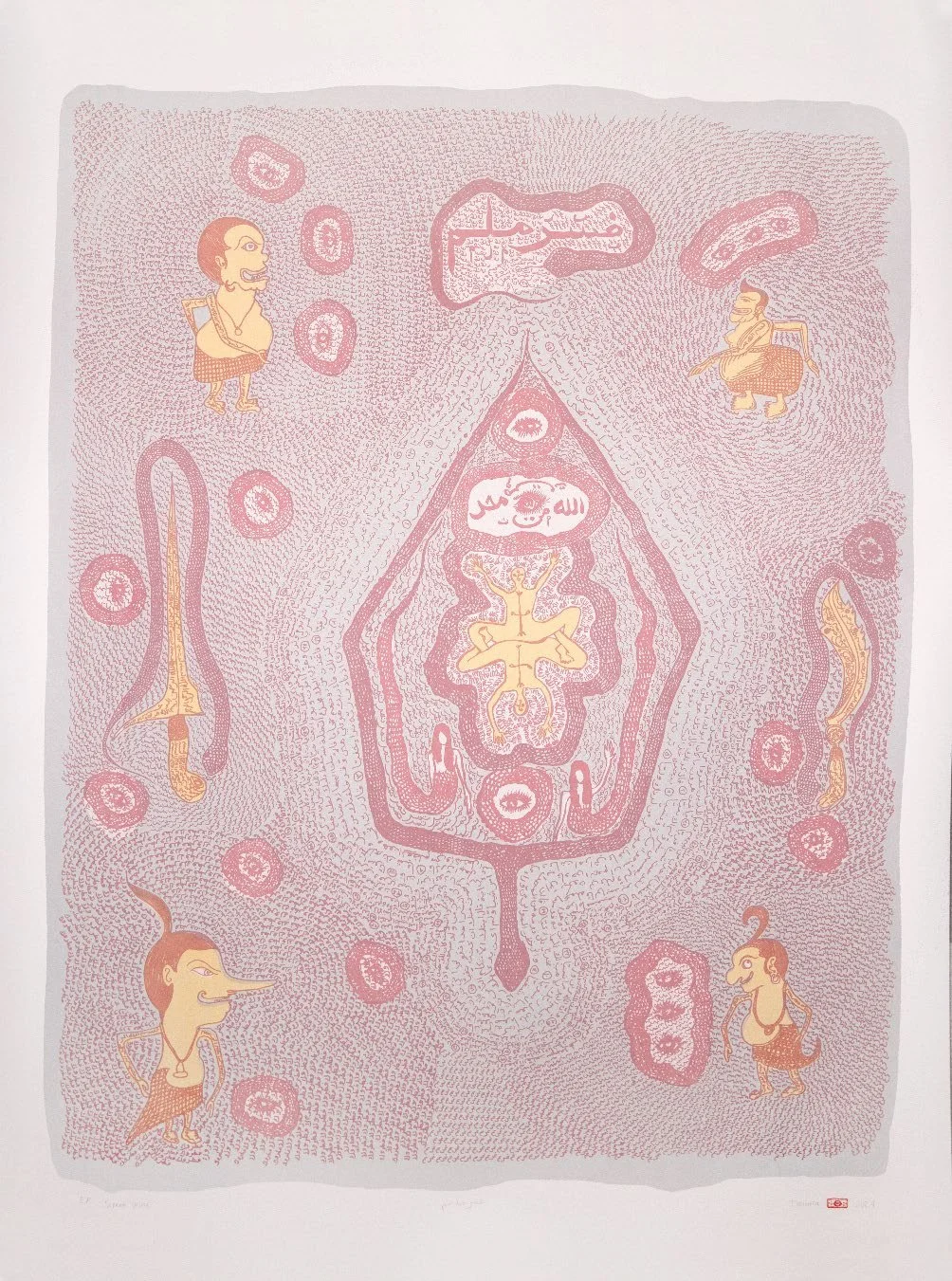
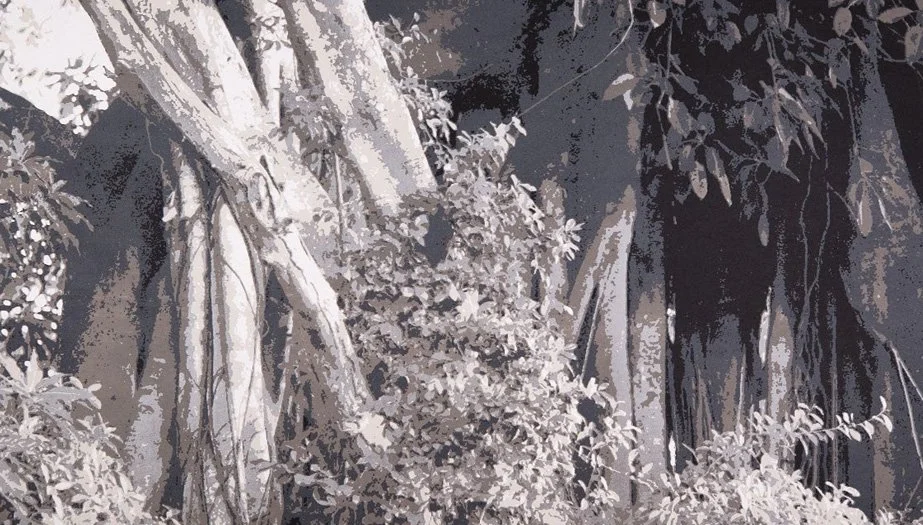
Tamarra in collaboration with Krack Studio, Rajah 2025. Screenprint on 100% cotton Clairefontaine paper 200 x 150 cm
Other Education Resources: