
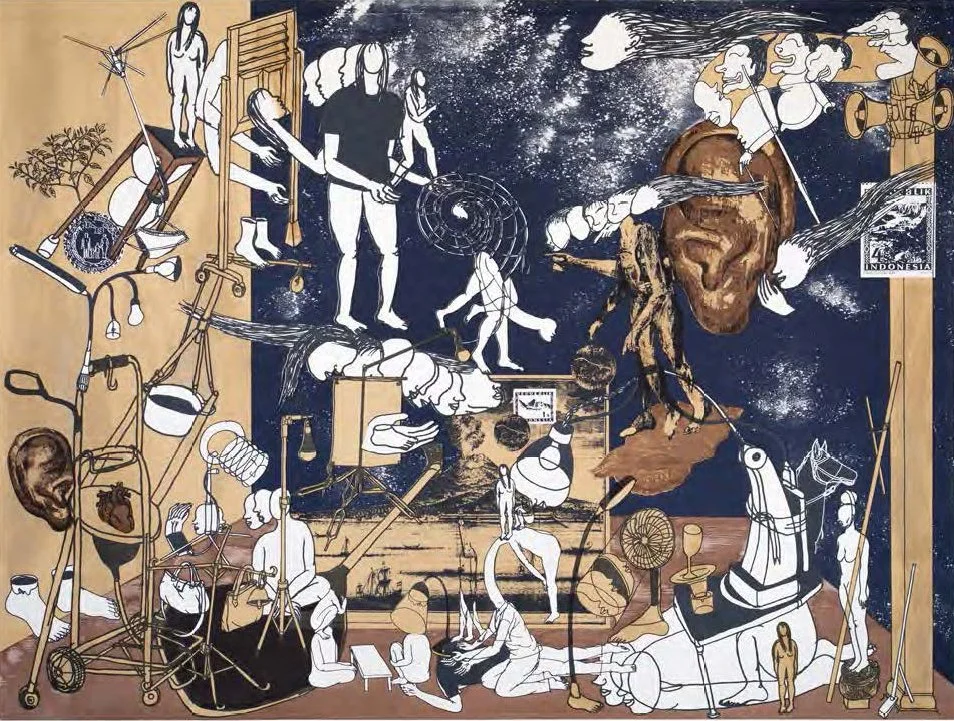
Ipeh Nur in collaboration with Krack Studio, Pasar Senthir 2024. Screenprint on 100% cotton Clairefontaine paper 150 x 200 cm
IPEH NUR
Material Memory and Market Histories
Ipeh Nur’s screenprint explores the chaotic second-hand markets of Java—known as Pasar Senthir or Pasar Klitikhan. Her work reflects on the life cycles of objects, showing how discarded or broken items are given new meaning. Created using natural pigments like indigo, cloves, charcoal, and clay, her piece also references Indonesia’s colonial history and the cultural significance of these materials. Ipeh’s contribution offers a rich study in materiality, symbolism, and socio-historical context. Her use of traditional dyes connects artmaking to environmental and historical narratives, while the subject matter invites reflection on consumerism, value, and cultural memory. Students can explore how materials and technique shape meaning, and how art can comment on cycles of use, waste, and renewal within society.
Analyse & Write
What do Ipeh Nur’s photographs of Pasar Malam visits and her studio reveal about her material and conceptual practice? Write an extended response, referring to images throughout your writing.
In your response consider:
• Research, information gathering and archives
• Materials and their meanings
• Process and methods
• Collaboration and the artist as a team
• Conceptual intent