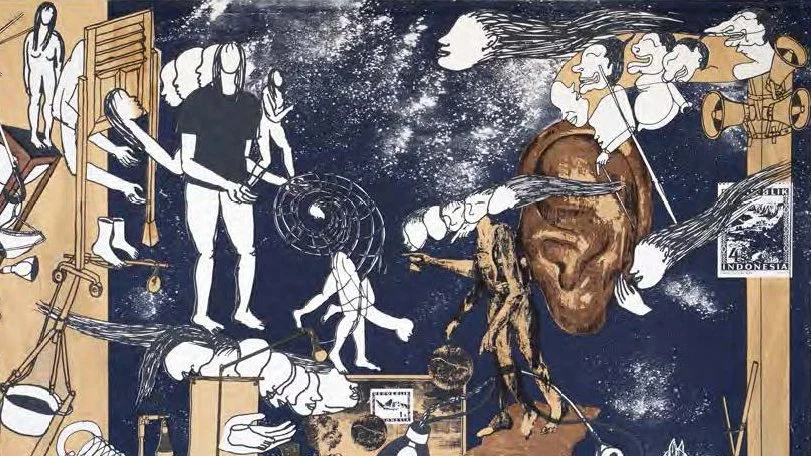
Education Resources for Teachers and Students Stage 4
Download the full education kit Stage 4 here
PASAR MALAM \ NIGHT MARKET
CONTEMPORARY PRINTMAKING FROM INDONESIA & AUSTRALIA
EXHIBITIONS QUESTIONS
The questions provided in this resource may be used for written responses, examination preparation, or for open-ended discussions in the gallery or the classroom.
Pre-visit Questions
• What do you think a “night market” might look like? Have you ever visited a night market or festival?
• Have you ever been to Indonesia? What did you observe about their arts and culture?
• Why do you think artists might be interested in places like night markets?
• What techniques do you think artists might use to represent chaos, mystery, or ritual?
Visiting Exhibition Questions
• What do you think the phrase “the world reversed” means?
• Why might artists include themes like mysticism, mythology, or taboo in their work?
• Do any artworks make you feel uncomfortable, curious, or surprised? What do you think the artist wants you to feel?
• If you could ask one of the artists a question, what would it be?
Post-visit Questions
• How do you think art can help us talk about difficult or hidden topics like violence, gender, or belief?
• Choose one artwork and describe how you would respond to it in your own artmaking?
• What connections can you make between the exhibition and your own community or culture?
• Would you recommend this exhibition to a friend? Why or why not?
VOCABULARY
Appropriation: to take something for one’s own use. In art this refers to the sampling of an image and redefining its established meaning through its involvement in new work.
Colonisation: The act of one country taking control over another, often leading to cultural loss, exploitation, and long-term impacts on identity and society.
Contemporary: belonging or occurring to the present.
Conventional: things that are normal, ordinary and following the accepted way.
Cultural hybridity: A mix of different cultural influences in one person or artwork.
Identity: How someone sees themselves, including culture, beliefs, and experiences.
Marginalisation: When a group or idea is pushed to the edges of society and ignored.
Memory: Personal or shared recollections that influence how we see the world.
Mysticism: Belief in hidden or spiritual truths beyond everyday understanding.
Narrative: A story told through words, images, or symbols.
Non-conventional: things that do not follow the acceptable or normal way, but are eccentric, alternative or new.
Otherness: The feeling of being different or outside the norm in a group or culture.
Recontextualization: is a process that extracts text, signs, or materials from its original context and reuses it in another context.
Ritual: A repeated cultural or spiritual practice, often with symbolic meaning.
Screenprinting: A methos of printing images using a mesh screen and ink.
Symbolism: Using images or objects to represent ideas or emotions.
Taboo: A subject or action that is socially or culturally avoided or forbidden.
Tradition: the transmission of customs or beliefs from generation to generation, or the fact of being passed on in this way.
Bahasa Indonesian and Javanese language words:
Istana Hantu: ‘Haunted House’ - A symbolic space of fear and folklore.
Kejawen: ‘Javanese Spiritual Beliefs’ - A mix of animism, mysticism, and Islamic teachings.
Pasar Klitikhan: ‘Thieves Market’ - A market selling old, discarded, or possibly stolen goods.
Pasar Malam: ‘Night Market’ - A lively, chaotic space of trade, ritual, and transgression.
Pasar Senthir: ‘Lamplight Market’ - A second-hand market, often chaotic and mysterious.
Pidan:’ Sacred Silk Textile’ - Used in traditional Cambodian rituals (referenced in related exhibitions). Preman: ‘Gangster / Thug’ - Often used to label victims of state violence.
Rajah: ‘Prayer Charm / Talisman’ - A written prayer worn for protection or fertility.
Sekaten: ‘Javanese Carnival Festival’ - A traditional celebration blending Islamic and animist rituals.
Siksa Neraka: ‘Torments of Hell’ - Religious imagery used to scare or instruct moral behaviour.
Tong Edan: ‘Crazy Barrel’ - A carnival ride where motorcyclists ride inside a barrel.
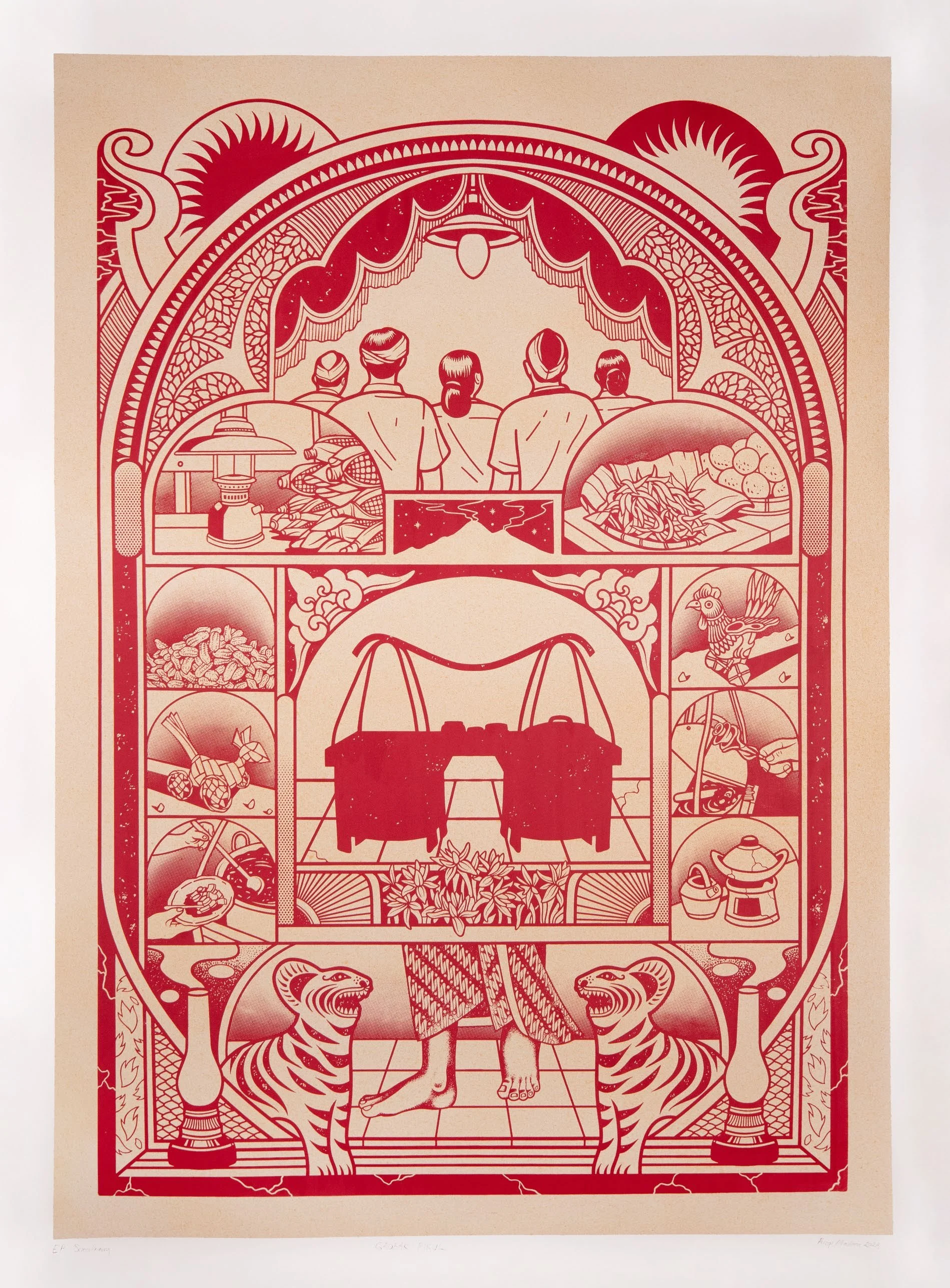
Rizqi Maulana in collaboration with Krack Studio, Grobak Pikul 2024. Screenprint on 100% cotton Clairefontaine paper 200 x 150 cm
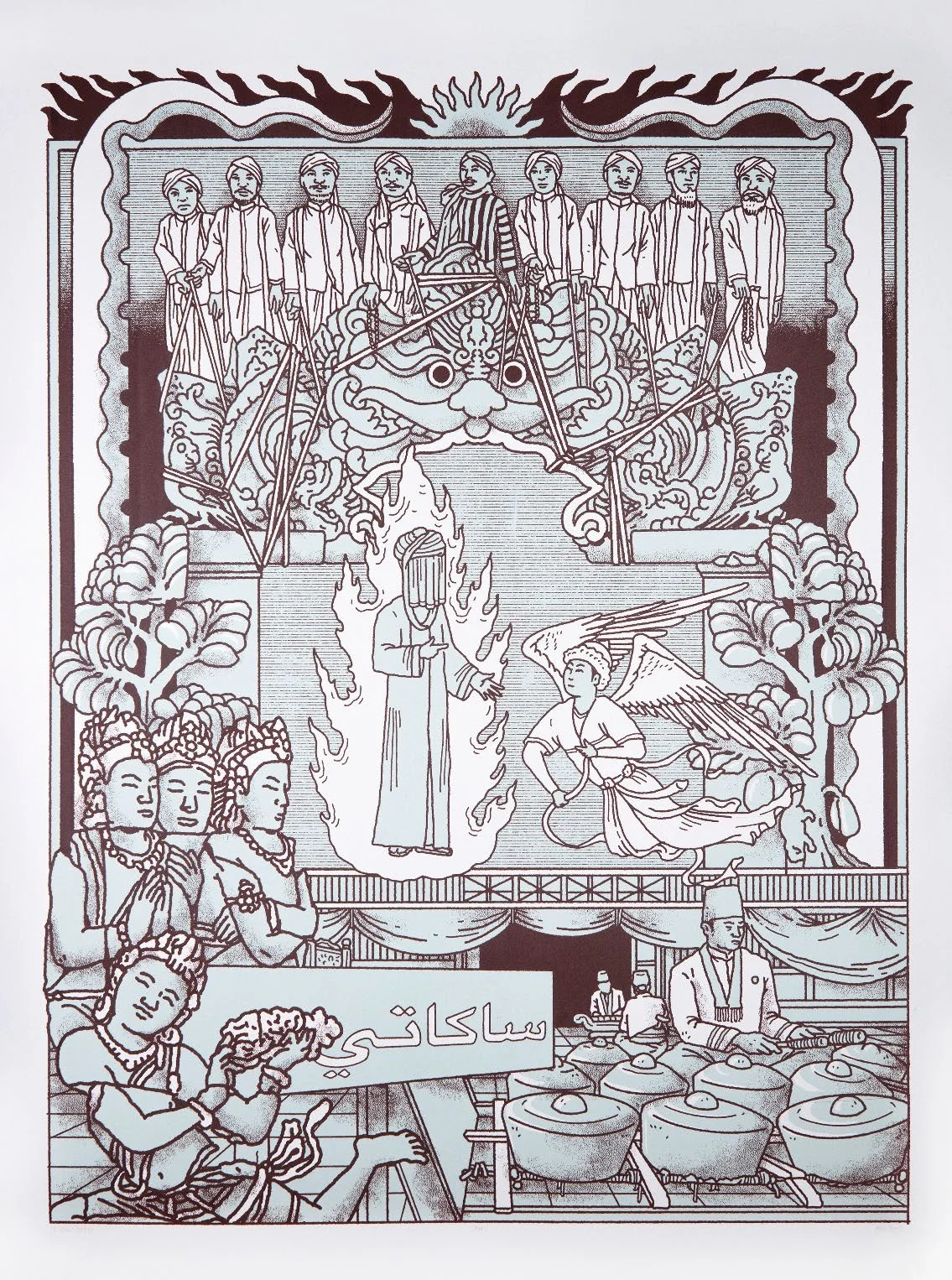
Prihatmoko Moki in collaboration with Krack Studio, Sakati 2025 Screenprint on 100% cotton Clairefontaine paper 200 x 150 cm
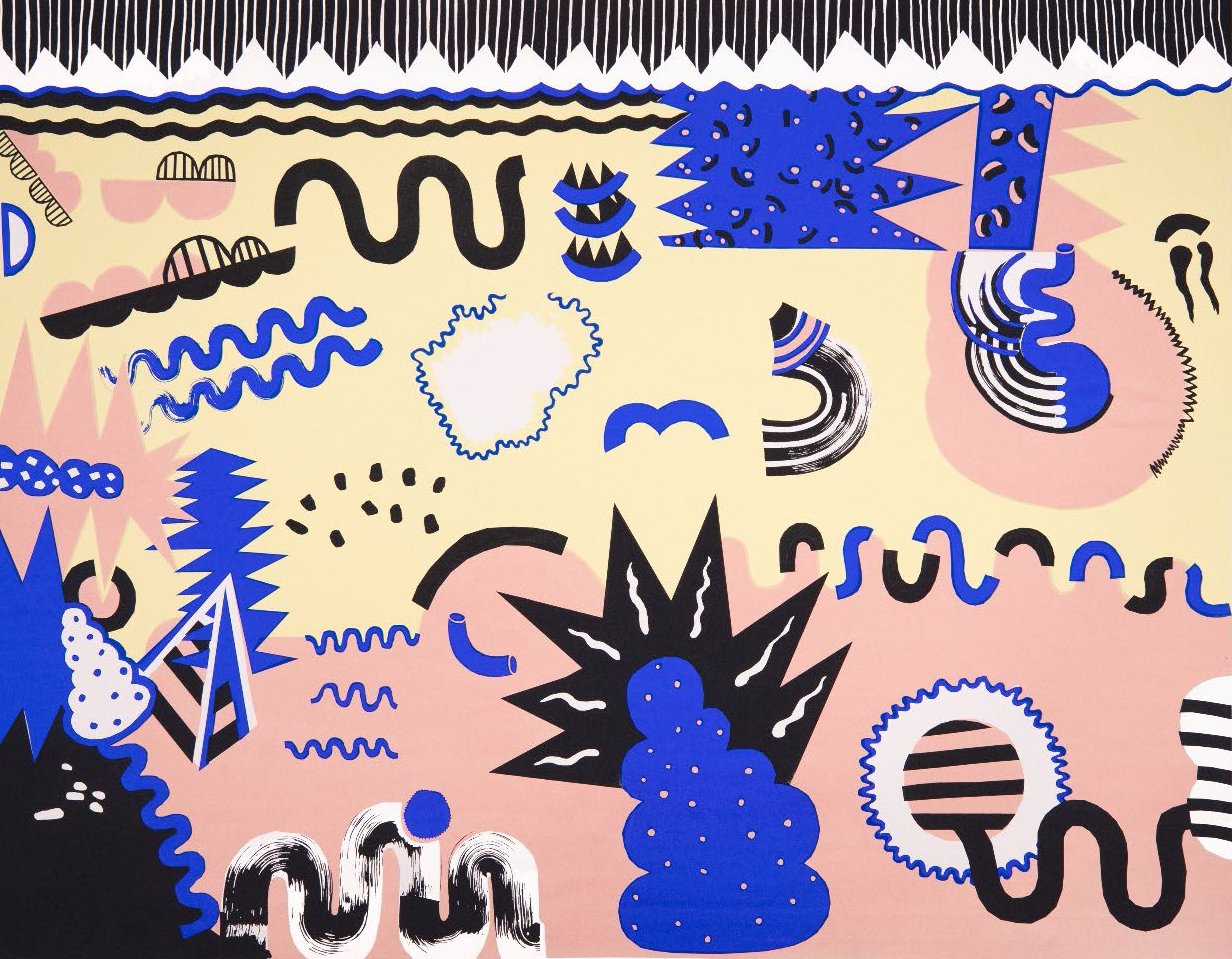
Amina McConvell in collaboration with Krack Studio Good Fortune 2024 Screenprint on 100% cotton Clairefontaine paper 150 x 200 cm
FOR TEACHERS
Pasar Malam is a touring exhibition featuring large-format screenprints by 15 Indonesian and Australian artists, exploring the vibrant, chaotic, and often transgressive world of the Indonesian night market ‘Pasar Malam’. Through complex design techniques and evocative imagery, the exhibition delves into themes of mysticism, mythology, social justice, and hidden histories. Artists draw on personal, cultural, and political narratives—ranging from spiritual rituals and folklore to erased episodes of violence and resistance.
For Secondary School Visual Arts students, Pasar Malam offers rich educational opportunities to engage in themes of mythology, politics and identity through a playful, contemporary lens and practice. It encourages critical engagement with cultural identity, symbolism, and the role of art in society. Students can explore how materials, scale, symbolism and collaboration influence meaning, while exploring Indonesian approaches to artmaking that reinterpret traditional practices to create bold, contemporary works. Through guided discussion and activities, Pasar Malam becomes a powerful platform for understanding the intersection of art, culture, and community in a global context. The educational resources can be used in a classroom setting or used as a tool for rich exploration during a school visit to one of its touring sites.
Additionally, the exhibition is a rich resource for Printmaking programs or individual students exploring printmaking through their artmaking.
FOCUS ACTIVITIES FOR STUDENTS
These activities are designed to help students in Stage 4 engage with the Pasar Malam: Night Market exhibition through observation, discussion, and creative response and can be completed in the gallery or classroom.
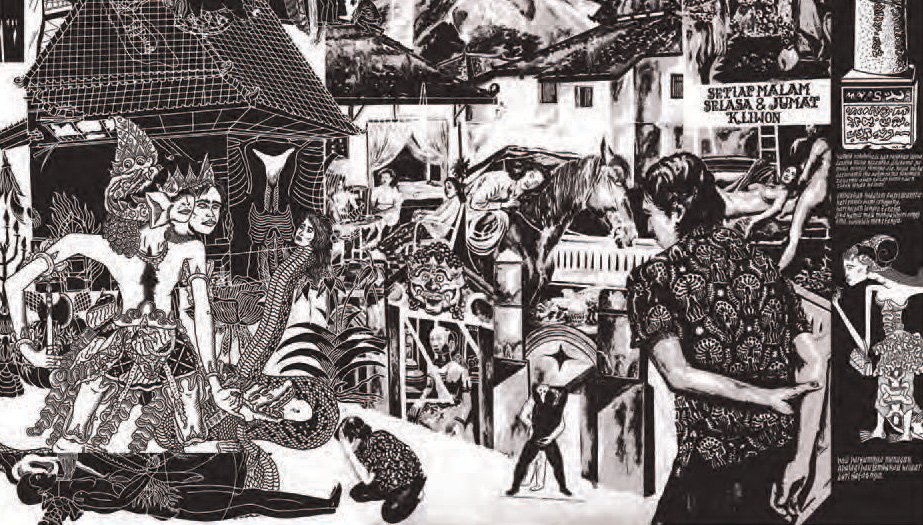
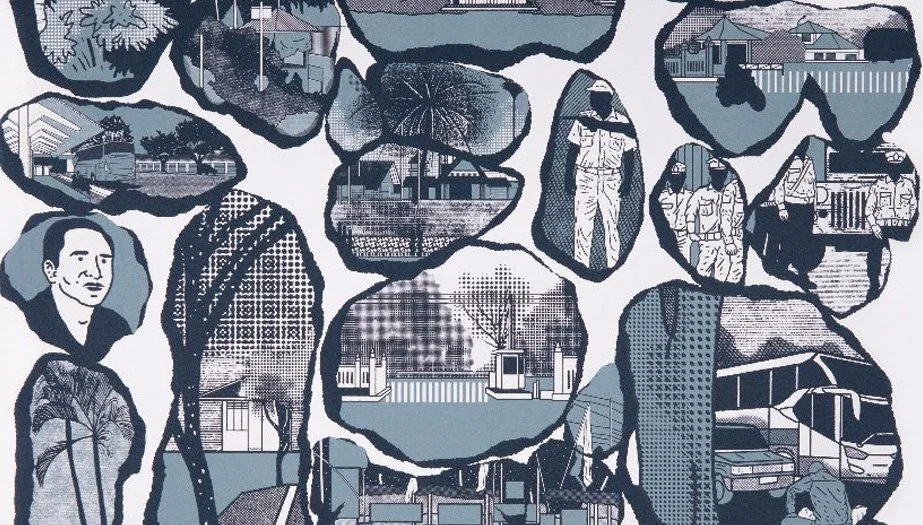
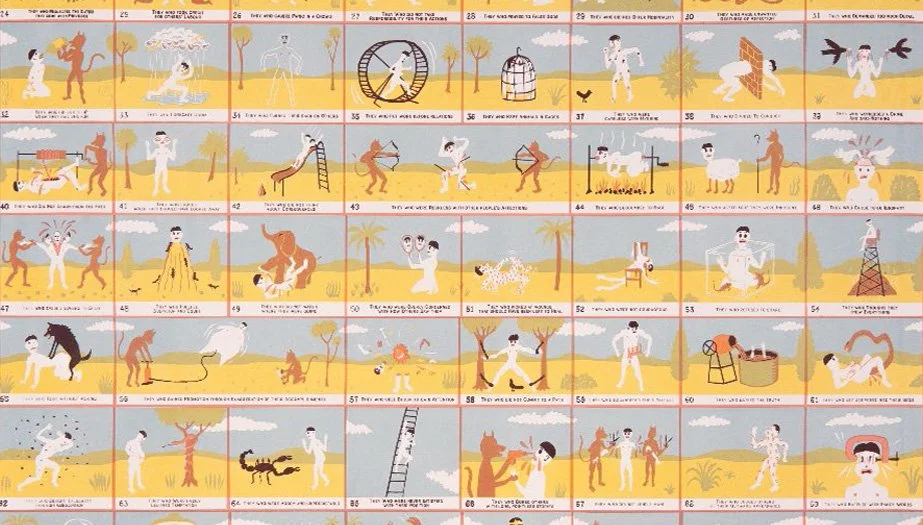
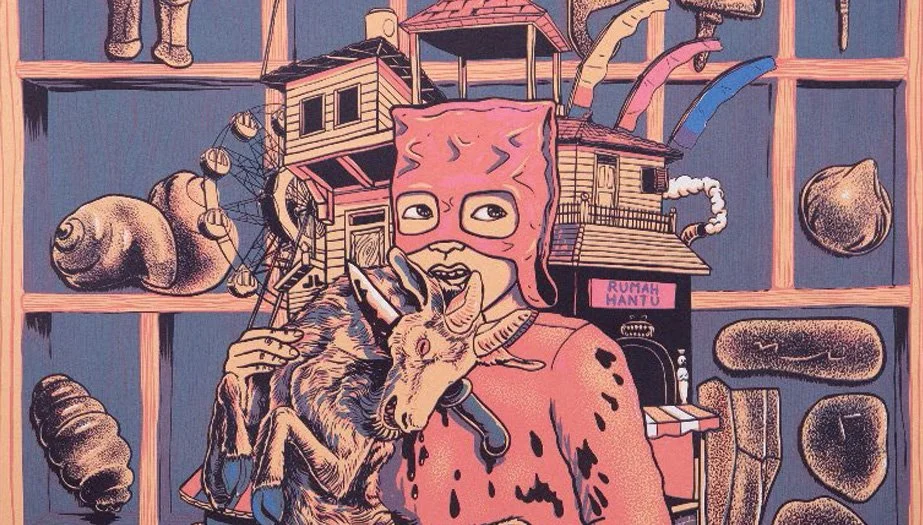
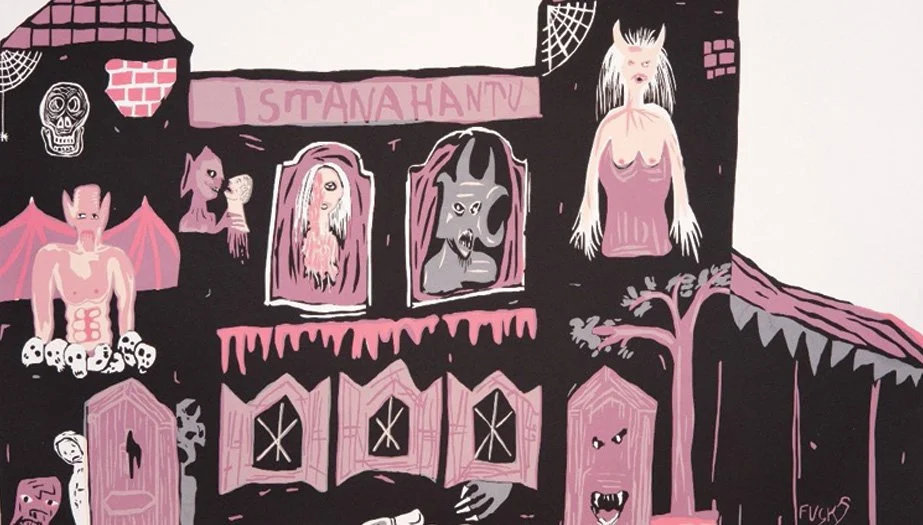
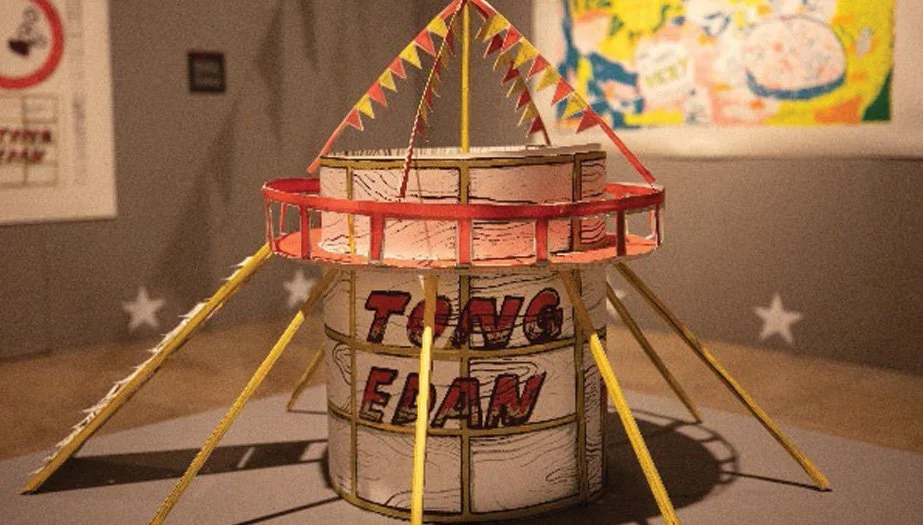
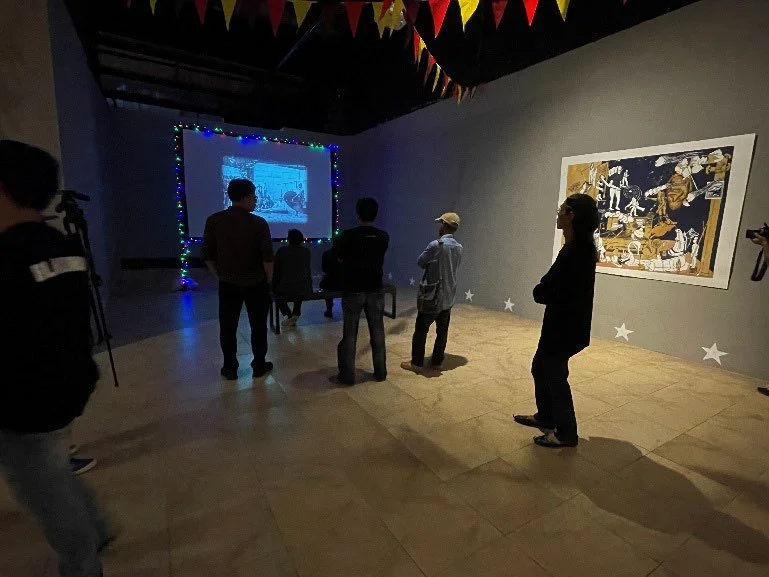
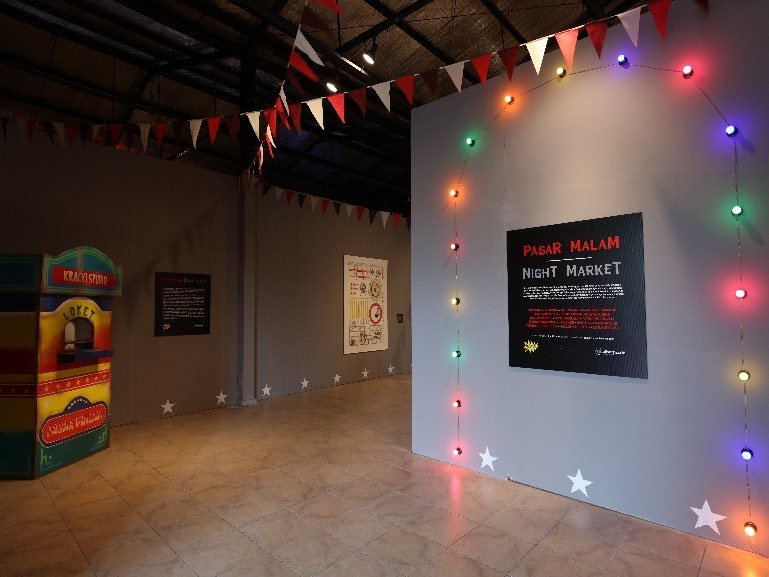
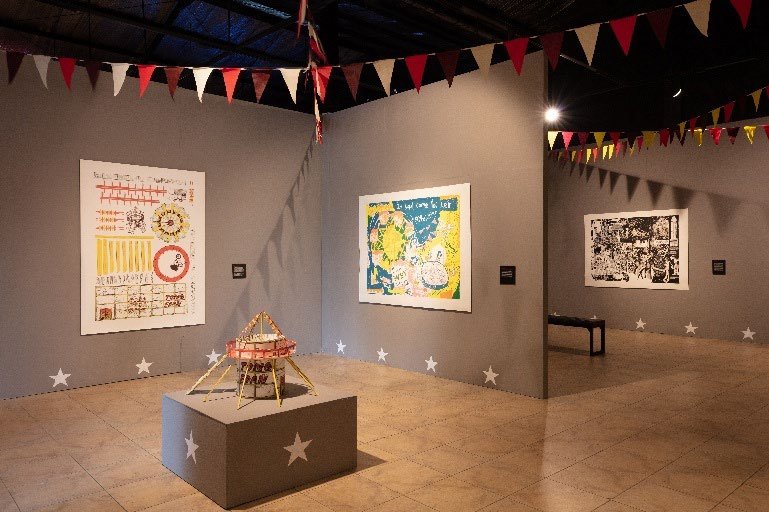
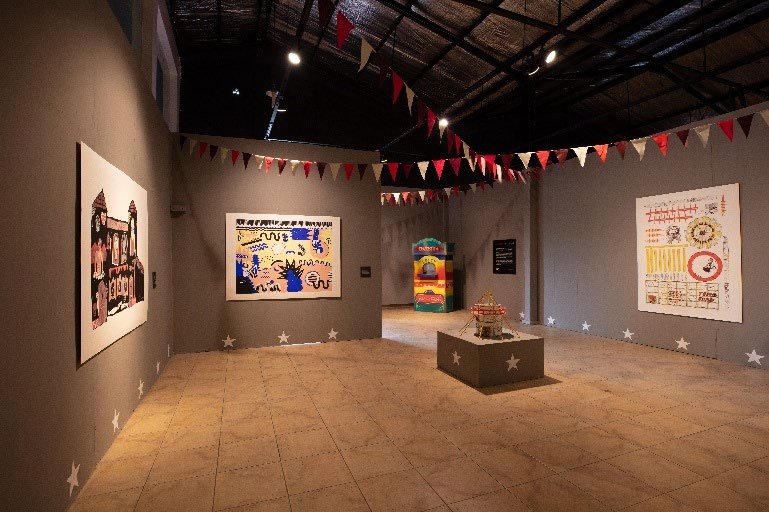
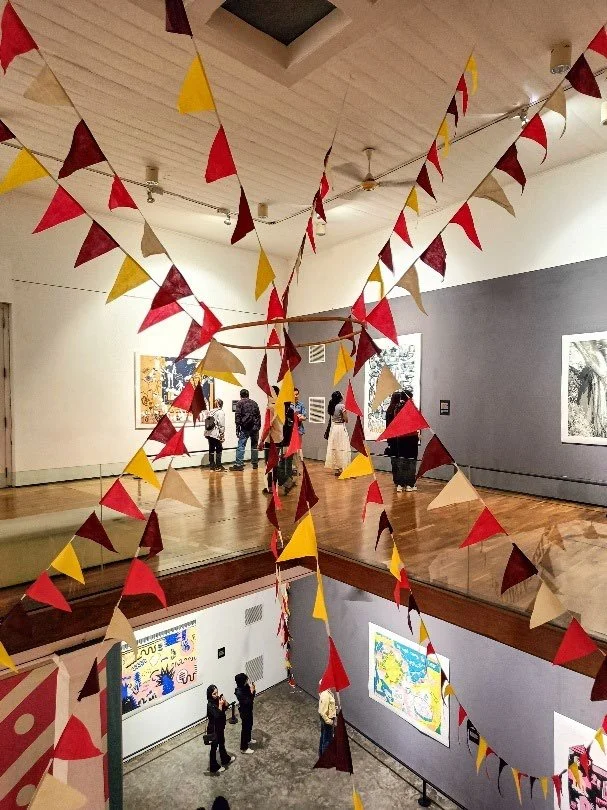
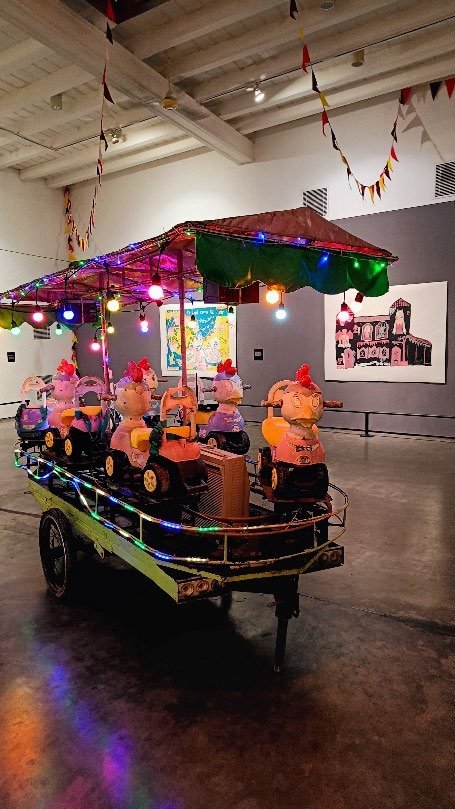
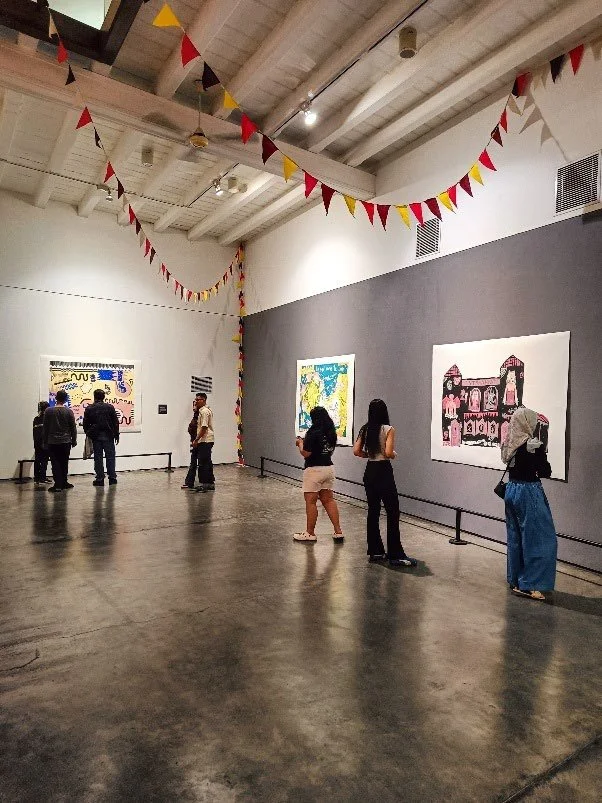
Image 1-4, Pasar Malam installed in Pendhapa Art Space, Jogja, May 2025
Image 5-7, Pasar Malam installed in Semarang Gallery, Semarang, September 2025
BEHIND THE PRINT
Exploring the Art of Screenprinting
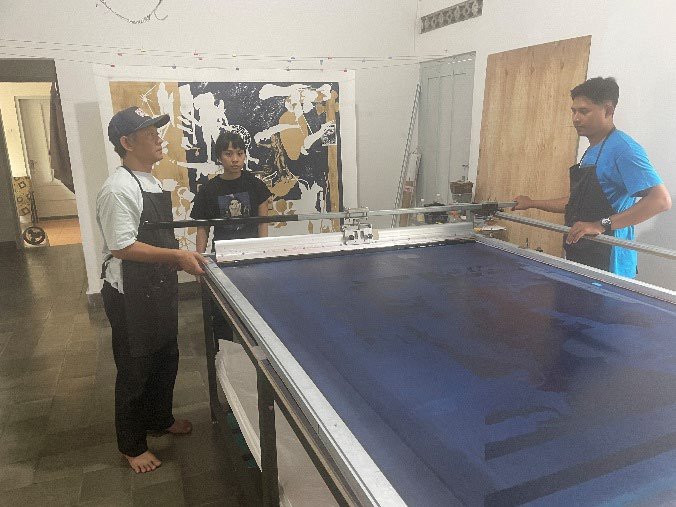
The role of the master printmaker is not simply technical—it’s deeply collaborative. The exhibition’s large-format screenprints were brought to life through close partnerships between artists and printmakers, where ideas, techniques, and visual language were developed together.
Malcolm Le Smith, Alfin Agnuba, and Rudi Hermawan worked side-by-side with artists at Krack Studio, engaging in ongoing dialogue via WhatsApp, email, and in-person studio sessions. Rather than executing pre-defined designs, the printmakers contributed creatively to the development of each work—offering insights into materials, scale, and process that shaped the final outcomes.
This collaborative model allows artists to experiment and refine their concepts, while the printmakers ensured technical excellence and consistency across the exhibition. The result is a body of work that reflects shared authorship, mutual respect, and a fusion of artistic and technical expertise. For students, this process highlights the importance of teamwork in contemporary art practice. It shows how printmaking is not just a craft, but a dynamic space for dialogue, innovation, and cultural exchange.
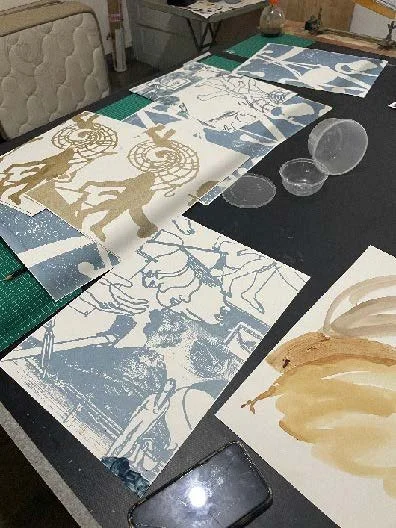
Take a sneak peek behind the prints to explore the methods and processes printmakers use to create their masterpieces.
What are the various steps you see in the printing of Leyla Stevens work?
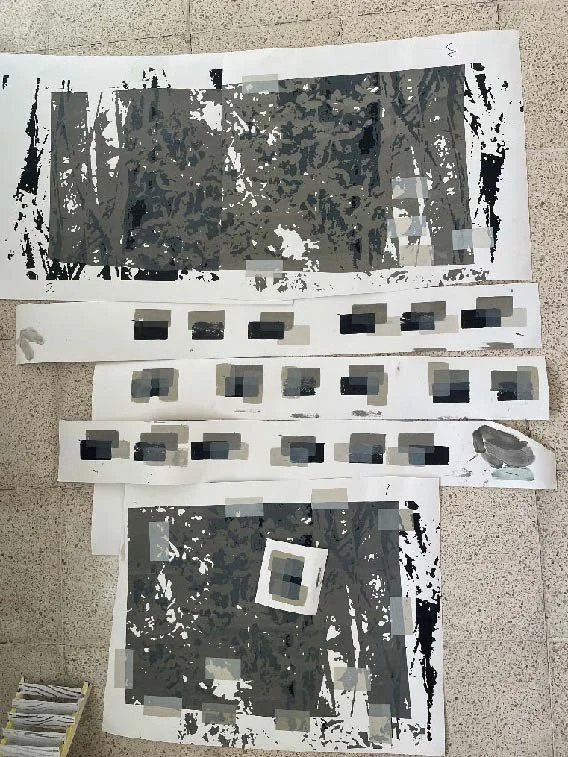
Leyla Stevens studio progress images at Krack temporary studio, Yogyakarta. Image courtesy of Krack Studio.
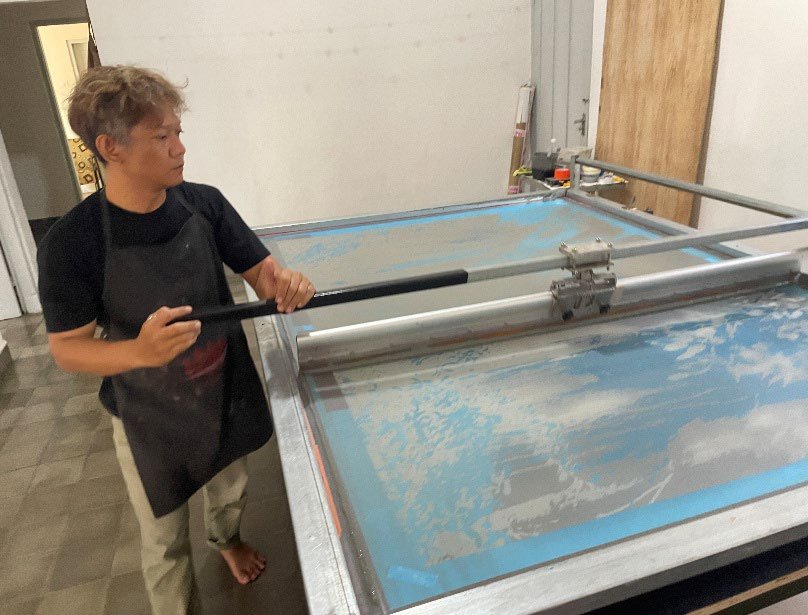
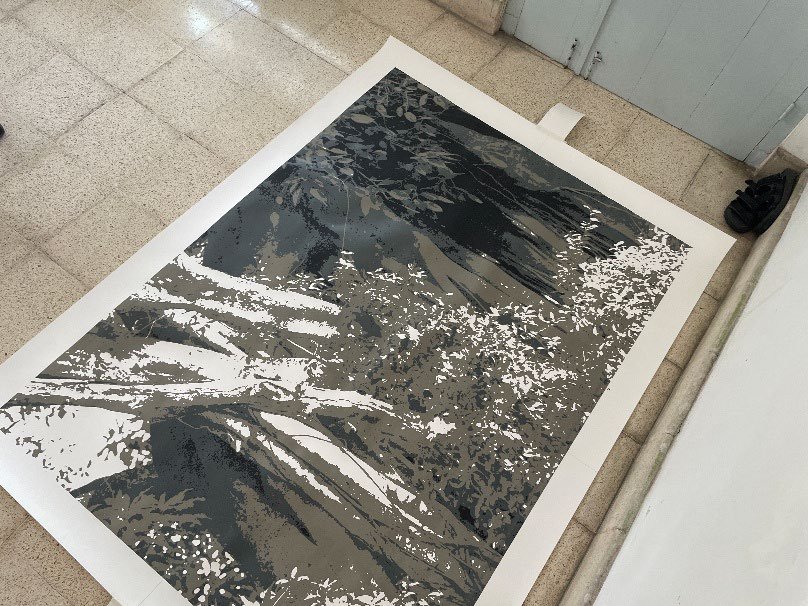
What do the images below reveal about Ipeh Nur’s material and conceptual practice?
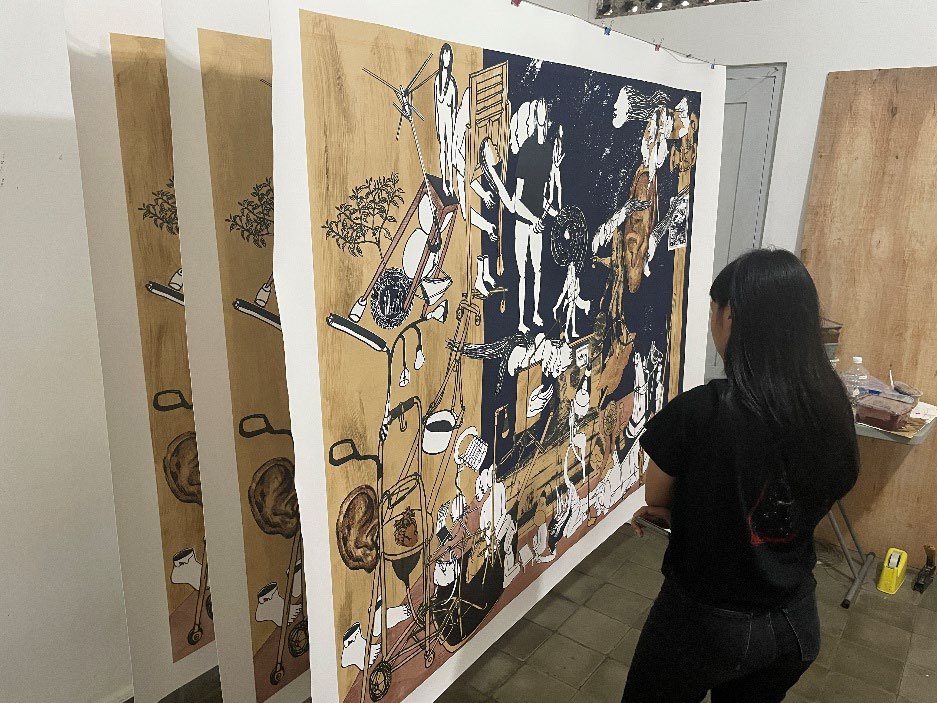
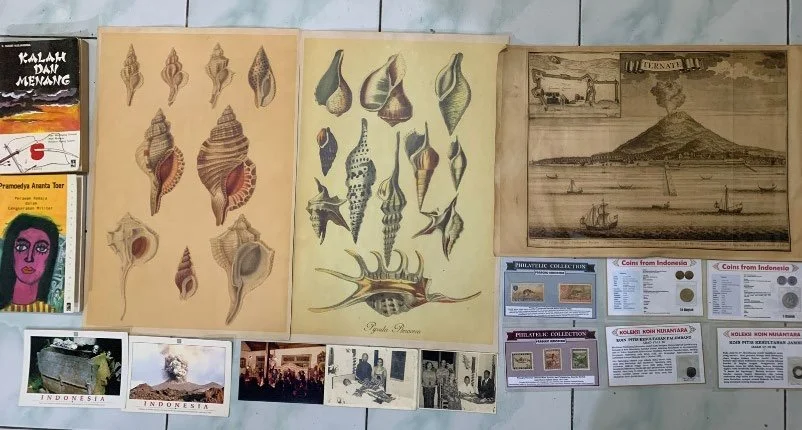
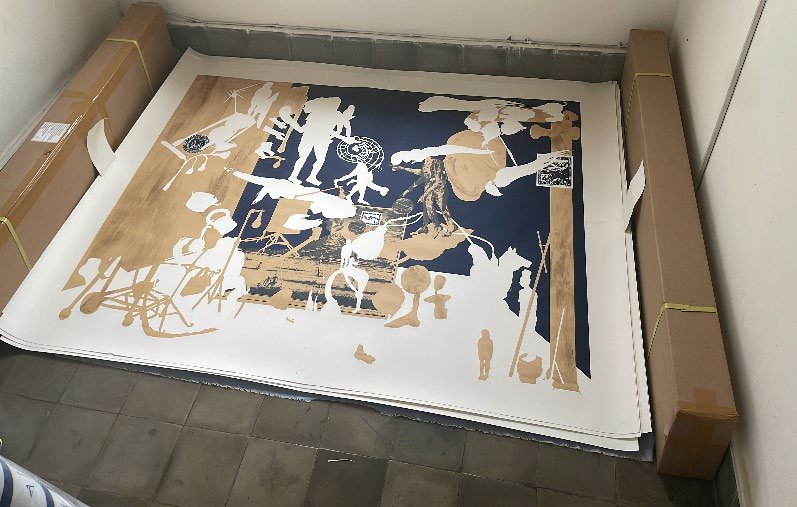
Ipeh Nur studio progress images at Krack temporary studio, Yogyakarta. Image courtesy of Krack Studio.
USEFUL LINKS
16ablermarle Project Space Website 16albermarle - Pasar Malam | Night Market
Krack Studio Website Krack!
Northern Centre for Contemporary Art Home | Northern Centre for Contemporary Art
Fremantle Arts Centre Walyalup Fremantle Arts Centre
Bunbury Regional Art Gallery BRAG | Exhibitions & Events in City Of Bunbury WA
Redland Art Gallery Redland Art Gallery | Redland Art Gallery
NorthSite Contemporary Arts www.northsite.org.au
Hazelhurst Arts Centre Hazelhurst
About contemporary art
in southeast Asia
Eluding simple definitions or falsely universalising connections between distinct histories and cultures, the art of southeast Asia is vibrant, dynamic and complex, bearing traces of “the rise and fall of kingdoms and empires, and … the historical traces of colonisation and the often-traumatic birth of nations.”1 Artists from Indonesia, Cambodia, Thailand, Myanmar, Laos, the Philippines, Vietnam, Singapore and Malaysia explore local and global themes including personal and national identity and community, cultural knowledge, power, faith and the increasingly urgent impact of humans on fragile ecosystems.
Find out more
https://theartling.com/en/artzine/artist-defined-contemporary-southeast-asian-art
https://www.sothebys.com/en/articles/five-of-the-most-influential-women-artists-from-southeast-asia
https://artradarjournal.com/7-influential-women-artists-from-asia-pacific/
Joan Kee (2011) Introduction Contemporary Southeast Asian Art, Third Text, 25:4, 371-381, DOI: 10.1080/09528822.2011.587681 at https://www.tandfonline.com/doi/pdf/10.1080/09528822.2011.587681
1 “No Country: Contemporary Art for South and Southeast Asia”, Solomon R. Guggenheim Museum and Foundation
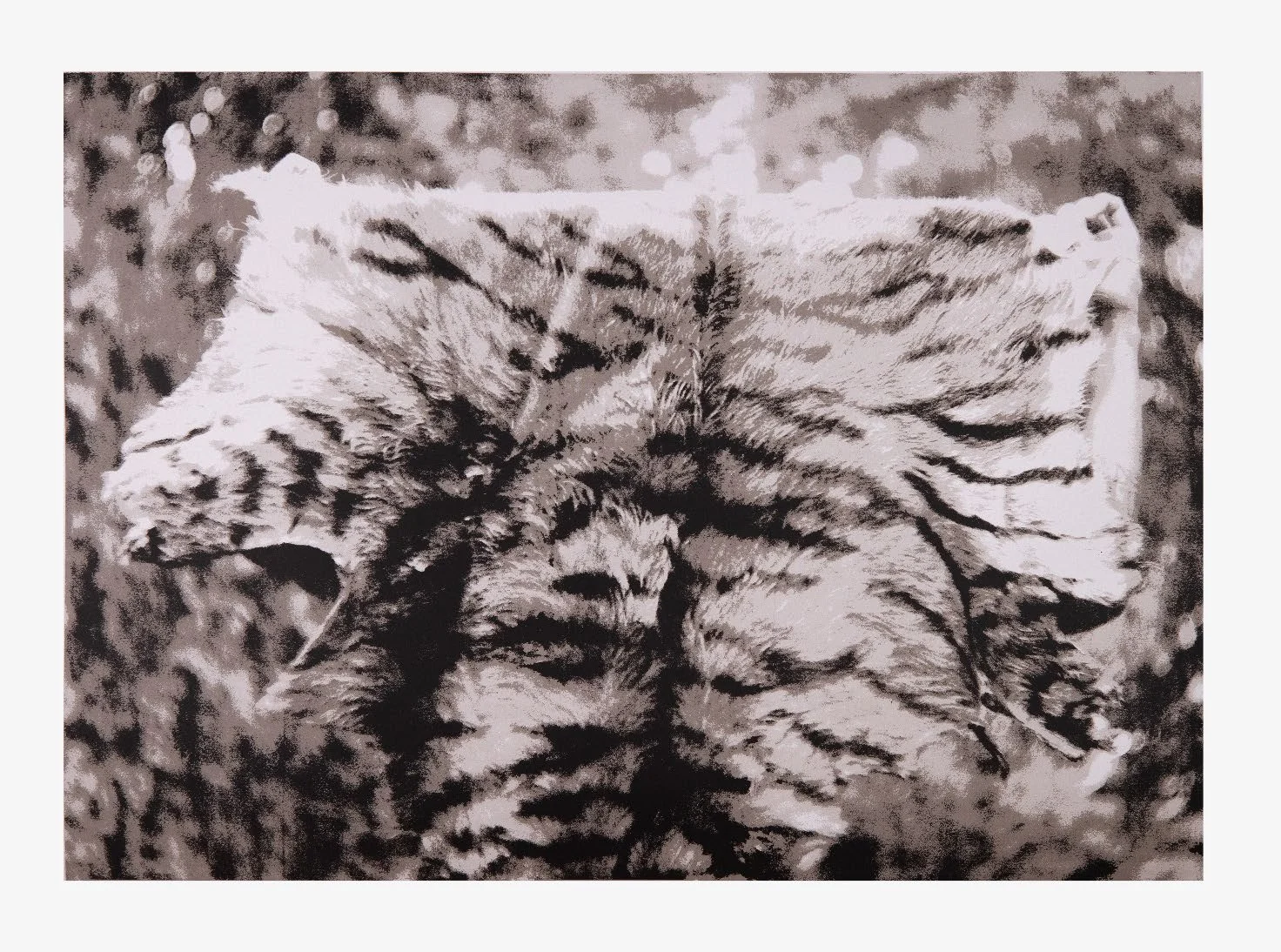
Timoteus Anggawan Kusno in collaboration with Krack Studio Silencio 2025 Screenprint on 100% cotton Clairefontaine paper 150 x 200 cm
Other Education Resources: